China High-Speed Rail: A Complete Guide for Foreign Travelers
On this page
China’s high-speed rail network is the largest in the world, and for most city-to-city trips it’s faster and more comfortable than flying. The trains are modern, punctual, and — once you know how the ticketing works — surprisingly easy to use with a foreign passport. This guide walks you through booking, boarding, and the little things that catch first-timers out.
The 30-second answer
- Book on the official 12306 English site or app — no agent or mark-up needed.
- Your passport is your ticket. There’s no paper ticket to collect; you board by scanning your passport at the gate.
- Verify your identity once (online or at any station counter), then booking takes minutes.
- Buy ahead for busy routes — tickets open ~15 days out and popular trains sell out.
Why take the train
For trips under about 1,000 km, high-speed rail usually beats flying:
- No 2-hour airport buffer — arrive 30–40 minutes before departure and you’re fine.
- Stations are in city centers, not 40 km outside town.
- Trains are punctual and run frequently — major routes have departures every 15–30 minutes.
- More luggage room and no liquid restrictions or strict baggage weighing.

Train types, in one line
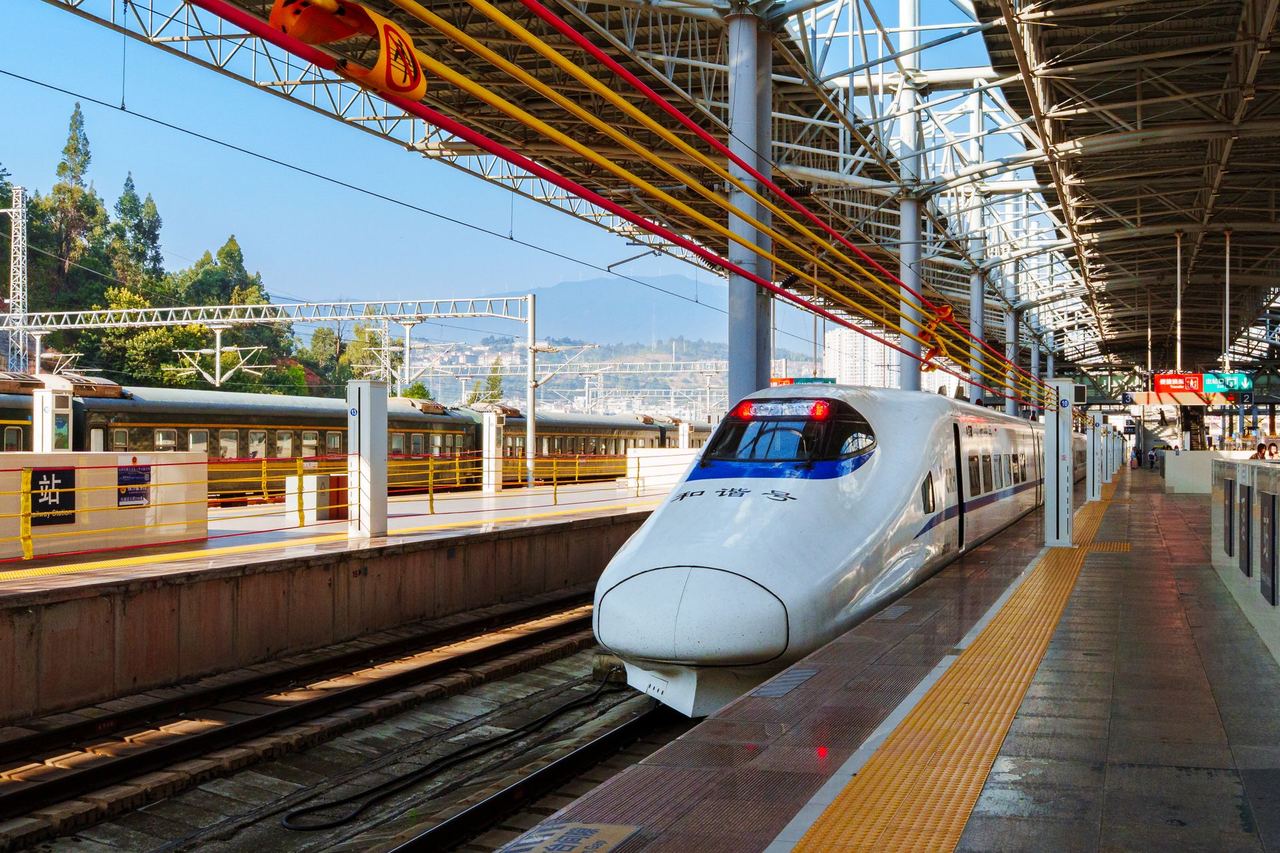
- G trains — the fastest, 300–350 km/h, long-distance high-speed rail.
- D trains — slightly slower (200–250 km/h), often on regional routes.
- C trains — short intercity runs between nearby cities.
For most travelers, you’ll be booking G or D trains. The “high-speed” experience — reserved seats, air conditioning, on-board power — applies to all of them.
Booking your ticket
Step 1: Get verified (once)
China Railway uses real-name ticketing, so you must verify your identity before your first booking. Two ways:
- Online: register on the official 12306 English website (www.12306.cn/en) or the Railway 12306 app, choose “Foreign Passport” as your ID type, and enter your name exactly as on your passport. You’ll upload a photo of your passport page; manual review typically takes 3–5 working days.
- At the station: bring your passport to any railway station ticket counter and ask to register it. This is usually done in about 10 minutes — a reliable backup if online verification is slow or fails.
Step 2: Search and select
- Open the 12306 app (switch to English in settings) or the English website.
- Enter your departure and arrival cities and your date.
- Filter by train type if you want (G for the fastest).
- Pick a train and a seat class (see below).
Step 3: Pay
The official platform accepts Chinese and international cards, and mobile payment. Some setups accept Visa, Mastercard, and PayPal for foreign passports. If online payment gives you trouble, you can always pay cash or card at a station counter.
Tip: tickets for popular routes go on sale ~15 days before travel at 8:00 AM Beijing time and can sell out within minutes over holidays. Set a reminder.
Seat classes at a glance
| Class | What you get | Roughly |
|---|---|---|
| Second class | 3+2 seating, comfortable, standard choice | ¥0.5/km |
| First class | 2+2 seating, more legroom, quieter | ~1.5× second |
| Business class | 2+1 lie-flat-ish seats, lounge access | ~3× second |
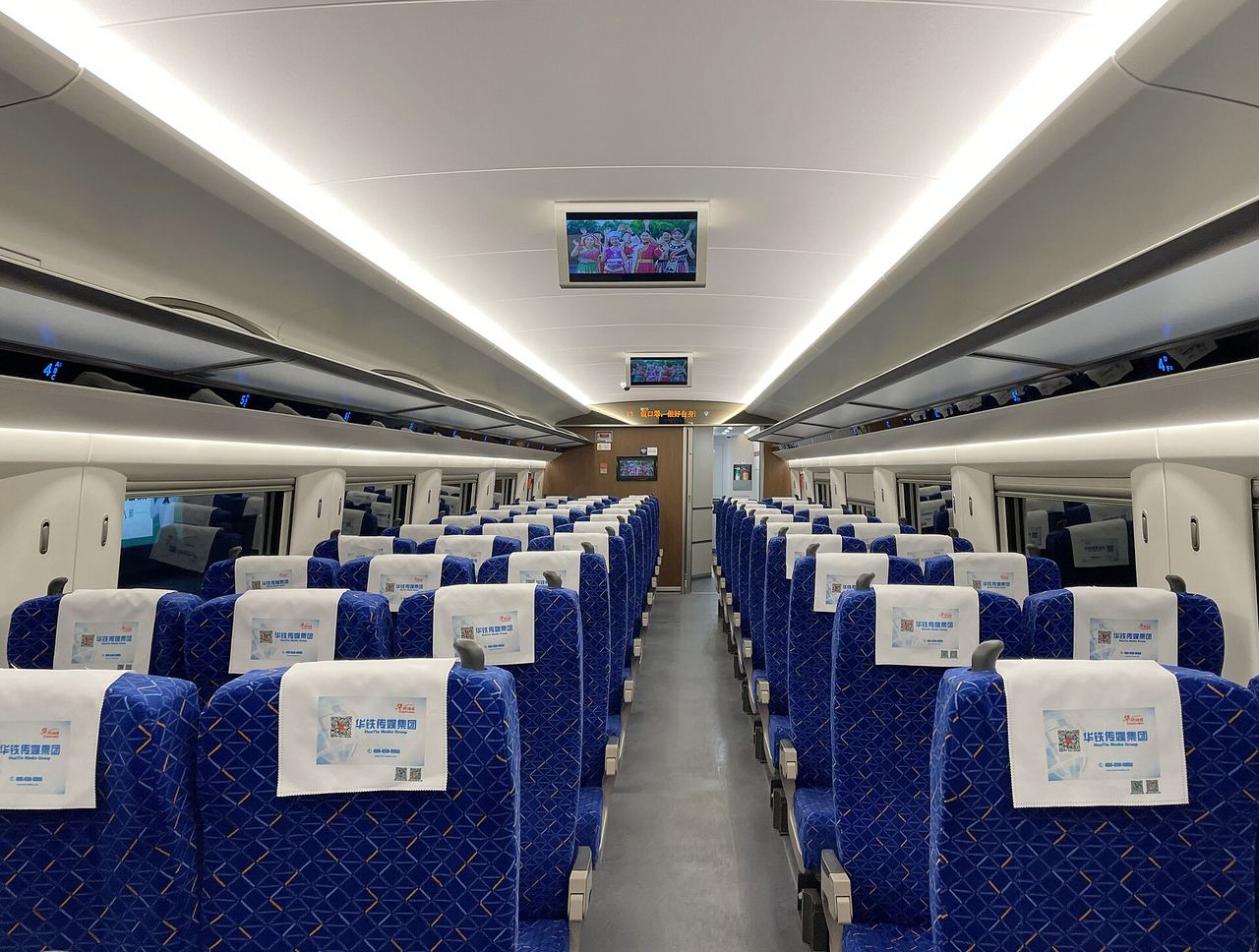
For most trips, second class is perfectly comfortable — it’s roomier than an economy plane seat and the standard choice for locals and visitors alike.
Boarding: your passport is your ticket
China moved to e-tickets, so there’s no paper ticket to print or collect:
- Arrive 30–40 minutes early at the station.
- Security check — bags go through an X-ray scanner, as at an airport.
- Find your gate on the departure board and your carriage number on your booking.
- At the gate, scan your passport (the original — not a photo) at the automatic gate, or show it to staff at the manual lane.
- On the platform, find your carriage by the numbers painted on the ground, then your seat inside.
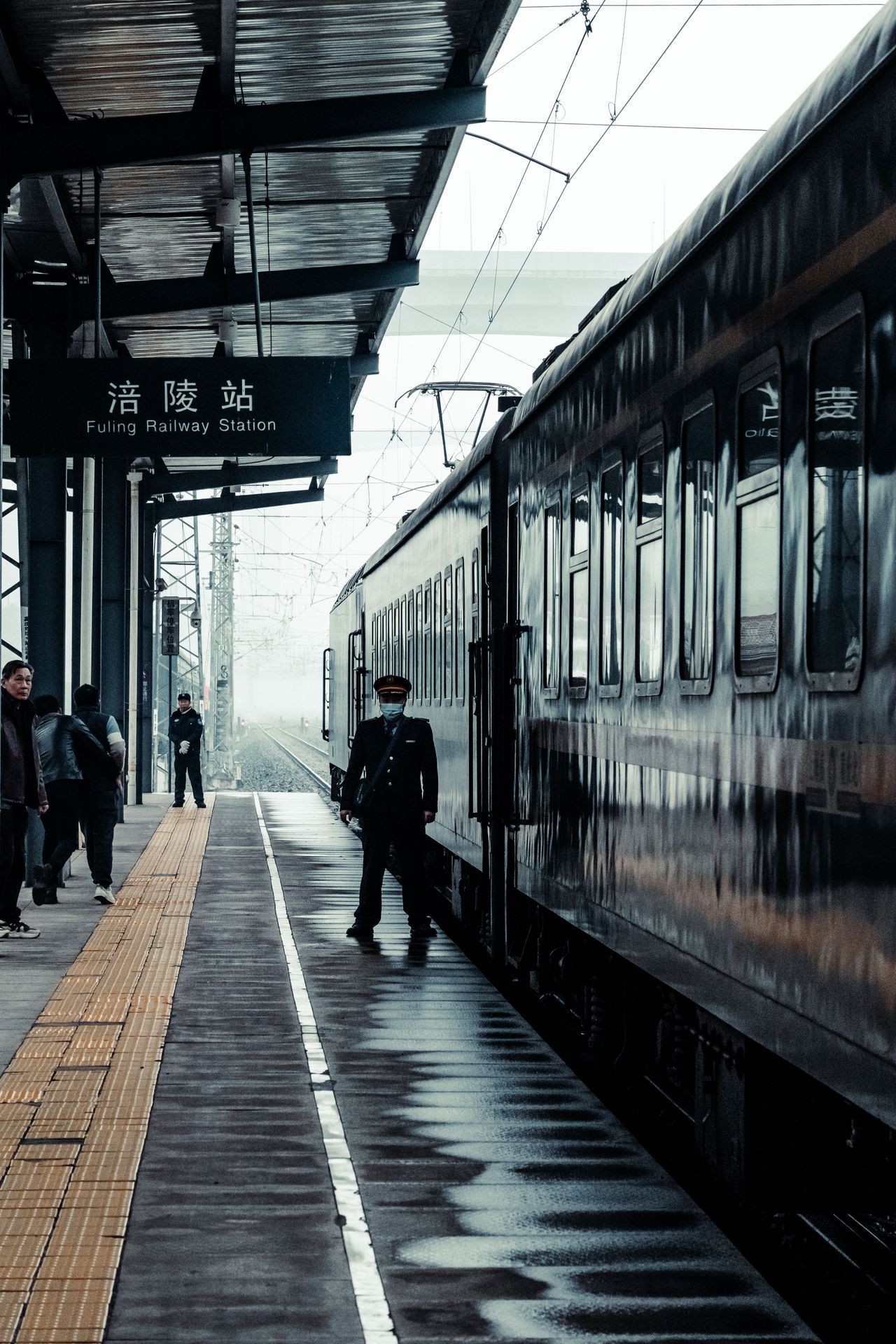
Keep your passport on you for the whole journey — conductors may check it against the ticket during the ride.
On board
- Luggage: there’s no checked baggage; you carry everything on. Overhead racks and racks at the carriage ends take larger bags.
- Food and drink: a cart comes through selling snacks and hot meals; some trains have a dining car. You can also bring your own food and bottled water.
- Power: seats have charging sockets (Chinese and USB outlets) on G trains.
- Wi-Fi: free on-board Wi-Fi is available on most G trains, though it requires a login and can be slow in tunnels.
Common mistakes to avoid
- Booking the wrong city name. Several cities share names in pinyin — double-check the characters or station code.
- Mixing up stations. Big cities have multiple stations (e.g., Beijing South vs Beijing West). The station is printed on your ticket — go to the right one.
- Arriving late. Gates close a few minutes before departure; trains do not wait.
- Using a passport photo or copy. Only the physical passport is accepted at gates.
Pre-trip checklist
- Download the Railway 12306 app (and switch to English)
- Register and verify your passport (or plan a station-counter visit)
- Book tickets ~15 days ahead for popular routes
- Note the exact departure station and carriage number
- Arrive 30–40 minutes before departure with your physical passport
Keeping this page accurate
Ticketing rules and the 12306 platform change over time. We keep this page up to date: the date below shows when it was last checked, and we refresh it whenever the booking flow or policy changes. If you spot something outdated, contact us.
