Guilin & Yangshuo: The Postcard Is Down the River
South
On this page
There’s a proverb every Chinese schoolchild learns, and it’s the reason you’re thinking about this trip at all: 桂林山水甲天下,阳朔山水甲桂林 — “Guilin’s scenery is the best under heaven; Yangshuo’s scenery is the best in Guilin.” It’s usually recited like a boast. It’s actually a set of directions.
Here’s the thing nobody tells you before you land. You book Guilin because you’ve seen the picture — the emerald river, the sugarloaf peaks stacked like a child’s drawing of mountains, a fisherman on a bamboo raft. Then you land, and Guilin is… a city. A perfectly pleasant, leafy, ordinary city. The picture isn’t here. It’s down the river, in the stretch between Guilin and the little town of Yangshuo, and in the karst countryside folded around it.
So the proverb is a map: go to Guilin, then keep going. This is the journey we’d hand a friend — down the Li River to where the postcard actually lives.
The river is the scenery
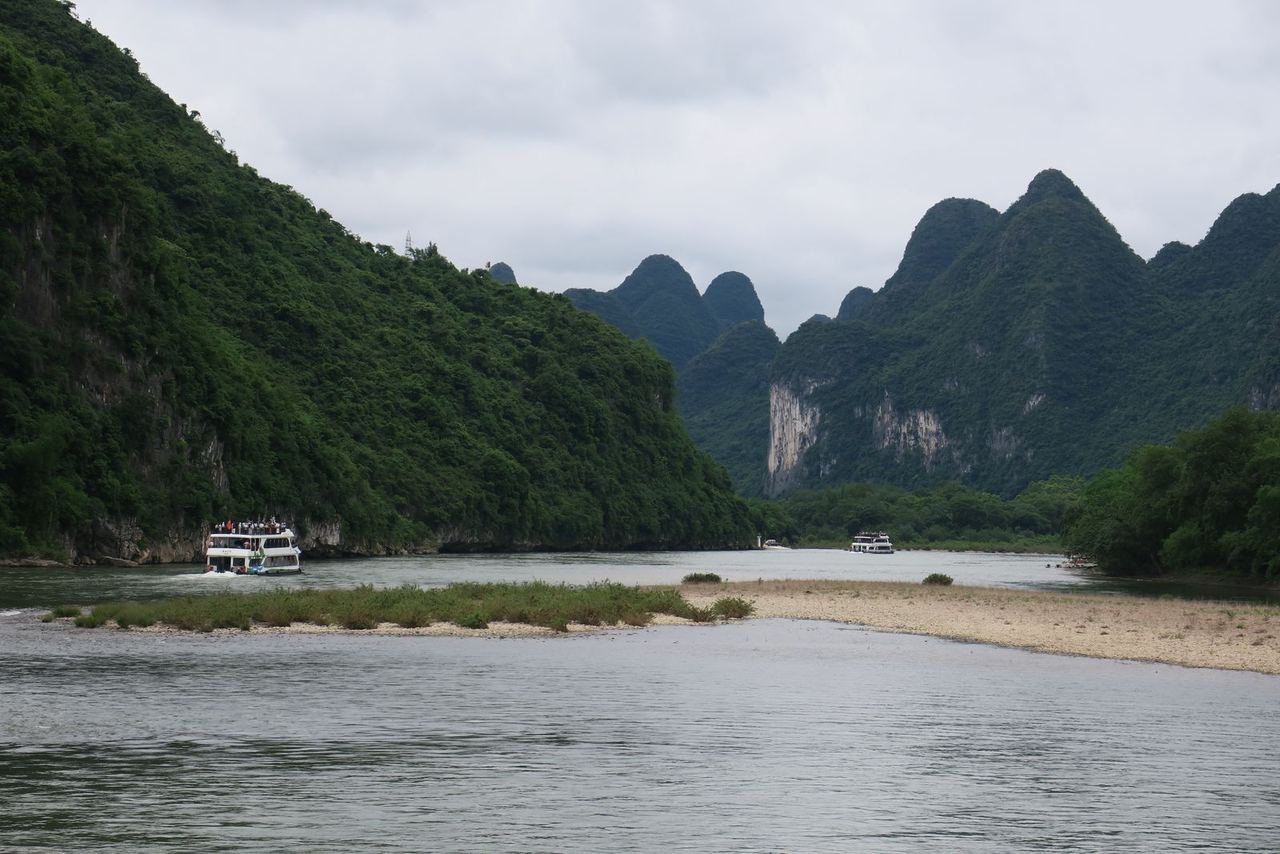
The Li River (漓江) is not the commute to the scenery. It is the scenery. The classic way to see it is the four-hour cruise from Guilin down to Yangshuo — eighty-odd kilometres of water the colour of green glass, winding through peaks so improbable they look like a painting that’s been left out in the rain.
Halfway down, the boat passes the view from the back of a ¥20 note — the sharp karst cone mirrored in the river at Xingping (兴坪), a stretch called Yellow Cloth Shoal (黄布倒影). People stand on the deck with a folded banknote held up against the actual mountain, checking them against each other like a map against the territory. It’s a small, silly ritual, and somehow genuinely moving — the mountain was here first, and someone decided it was worth printing on money.
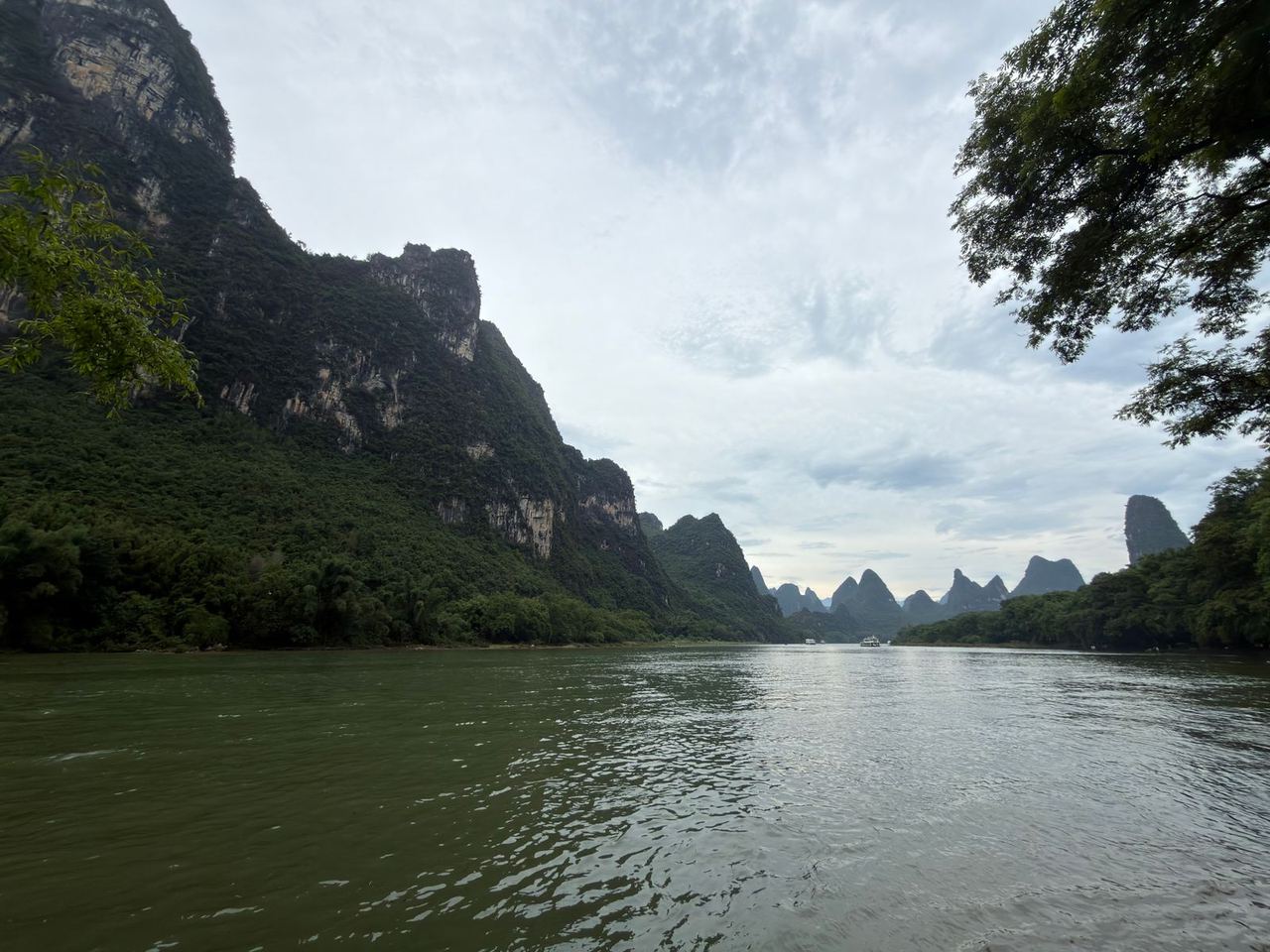
The rule we repeat to friends: the Li River runs on its own weather, and the honest truth is that the postcard is weather-gated. Fog and drizzle hang over these peaks for a good part of the year — especially February to April, the locals’ 烟雨 (yānyǔ, “misty rain”) season. Some days the mountains dissolve into a soft grey wash and you see almost nothing; the next morning after a downpour, the air clears and you see everything. There’s a word for what you’re hoping for — 烟雨 is also what the Chinese call the most beautiful version of this landscape, the one where the peaks float half-hidden in cloud. Don’t book one rigid river day and hope. Give the river two chances, and treat fog as part of the painting rather than a spoiler of it.
Yangshuo, where the postcard goes to live
The cruise ends at Yangshuo (阳朔), and this is the point of the whole proverb. Where Guilin is a city that has scenery nearby, Yangshuo is a town that sits inside it. Karst peaks rise straight out of the fields and the end of the main street, green and improbable, the way mountains do in dreams. Stay here, not in Guilin, if the scenery is what you came for — the proverb’s second line is not flattery, it’s the itinerary.
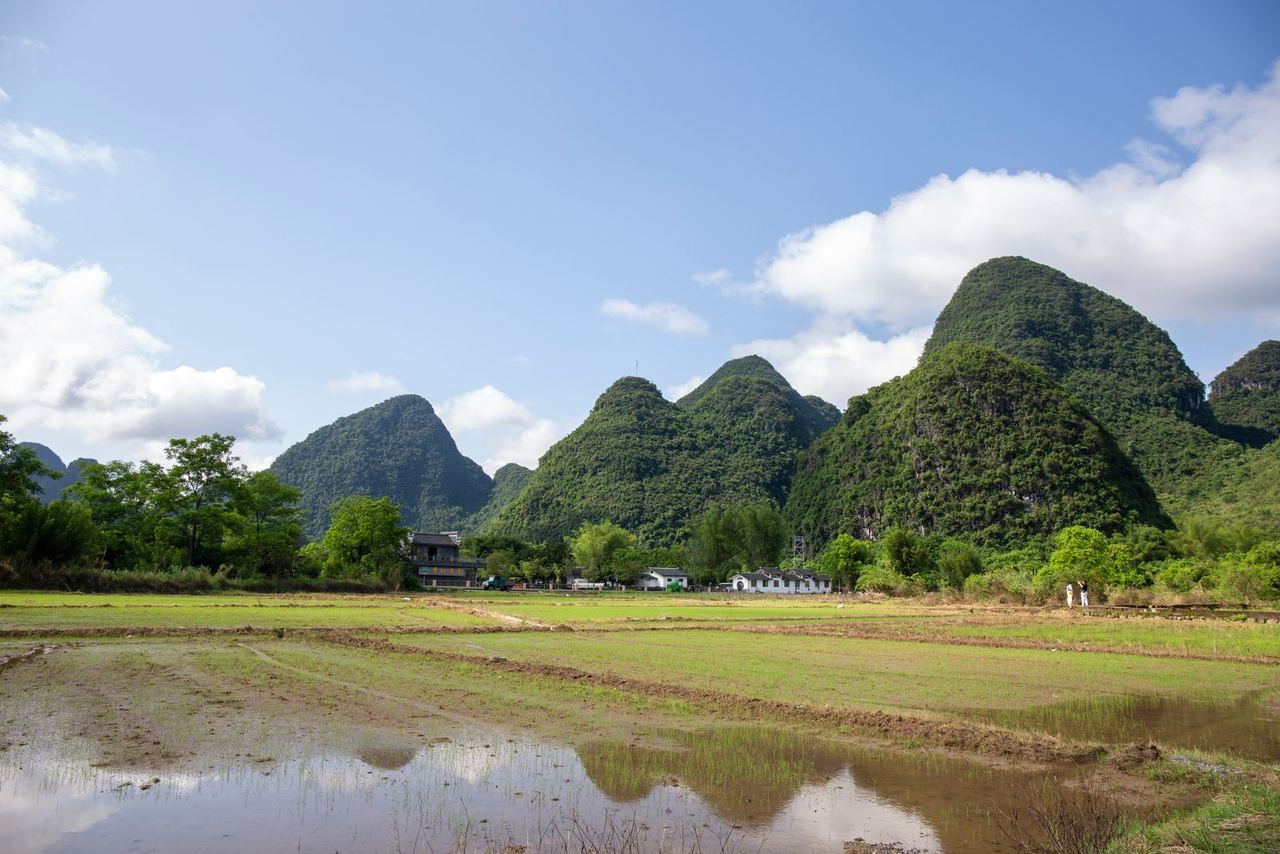
The single best thing to do in Yangshuo is the simplest: rent a bicycle and ride the Ten-Mile Gallery (十里画廊). It’s a flat, easy road that runs from the town out through the karst, past paddy fields and water buffalo and farmers who have been watching tourists cycle past for thirty years and no longer look up. You don’t need a route. You ride toward whichever peak looks best and the road bends to meet it. At the far end is Moon Hill (月亮山) — a peak with a perfect round arch worn through its crown — and along the way, the Big Banyan Tree (大榕树), a 1,400-year-old banyan that has probably been photographed with every bicycle Yangshuo has ever rented.
After dark, West Street (西街) is where the town lets its hair down — a short pedestrian street that has been the backpacker stop on this river for decades, all cheap beer, souvenir flutes, and the occasional bar with a view of a floodlit peak. It’s touristy in a way that feels, by now, almost historic. Go, have one drink, then leave before it starts feeling like any other party street in the world.
The quiet water
For all the drama of the big river, the better water is the Yulong River (遇龙河), the Li River’s slow, shallow, gentler tributary. Here the boats are bamboo rafts — long, low, made of lashed bamboo, poled along by a boatman standing at the back with a single bamboo pole, the way they’ve been moving people on this river for a thousand years.
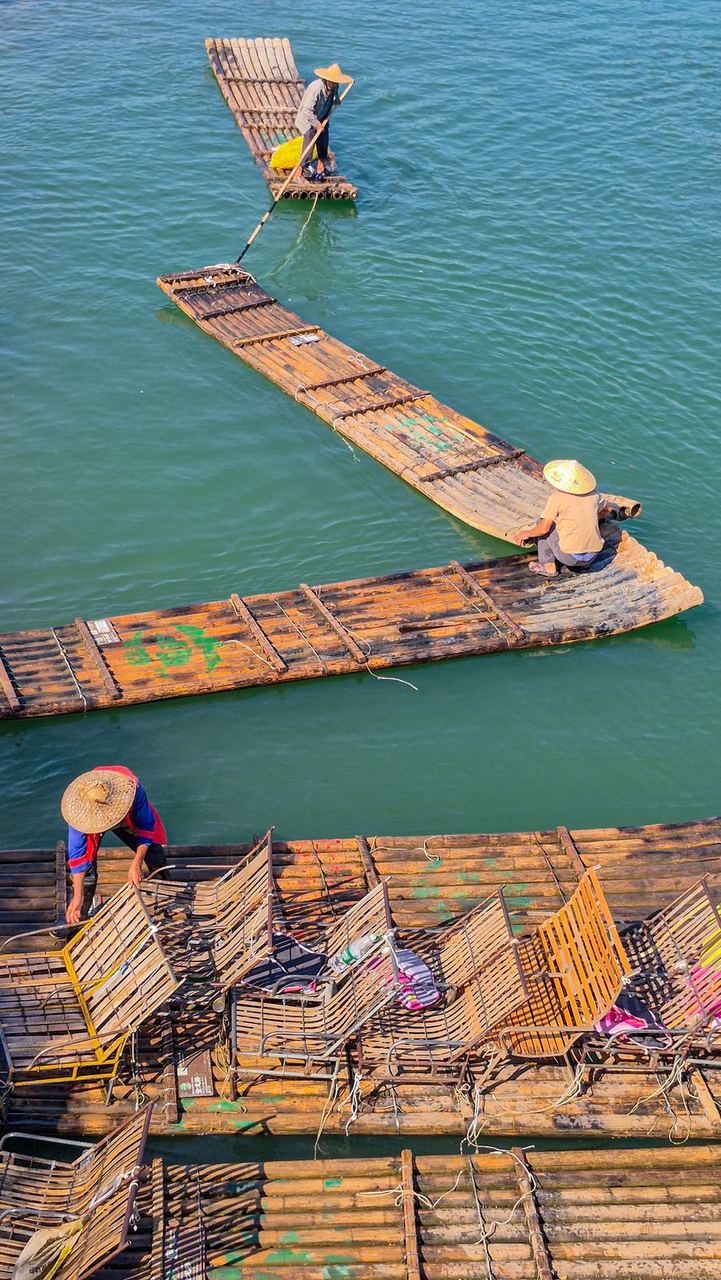
It’s the difference between a tour and a glide. There’s no engine, so there’s no noise — just the dip and push of the pole, the water under the bamboo, and the peaks sliding past on both sides, close enough to touch. On the Yulong you’re not a spectator of the scenery; you’re in it, at water level, the way the painter who invented this whole look must have seen it first.
Ride it in the late afternoon if you can, when the day’s heat goes out of the river and the peaks turn gold and then blue. This is the half-hour you’ll remember longest.
Up the mountain of rice
A couple of hours north of Guilin is the other face of this landscape, and it’s worth a full day: the Longji Rice Terraces (龙脊梯田) — the “Dragon’s Backbone.” For centuries the Zhuang and Yao people have carved the mountainsides into thousands of narrow terraces that follow the contour of the slope, so the whole mountain looks, from a distance, like a giant’s green fingerprints.
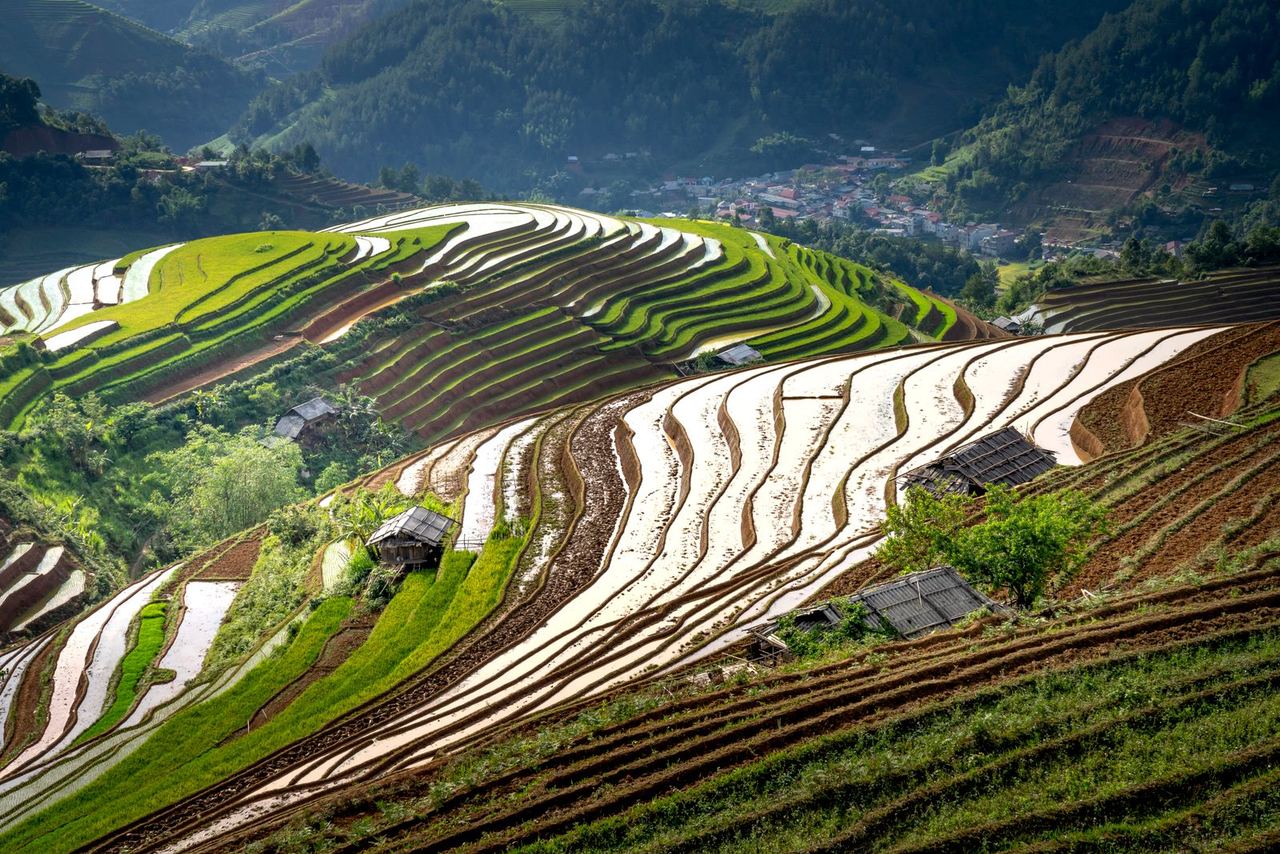
The terraces are a shape-shifter, and which face you meet depends entirely on when you come. In spring they’re flooded, and each step holds a pane of sky — a mountain of mirrors. In summer they’re the deepest green, the rice growing in glossy rows. In early autumn, just before the harvest, they turn gold. In winter they lie bare and brown, sometimes dusted with frost. There is no wrong season; there is only a different mountain.
The classic walk is up through Ping’an village (平安寨), a Zhuang settlement of stilted wooden houses, to the viewpoint called Nine Dragons and Five Tigers (九龙五虎) — from where the terraces ripple away in every direction like contours on a map. Walk it; don’t take the shuttle. The whole point of a mountain of rice is that you climb it at the pace rice grows.
Eat what the river gives
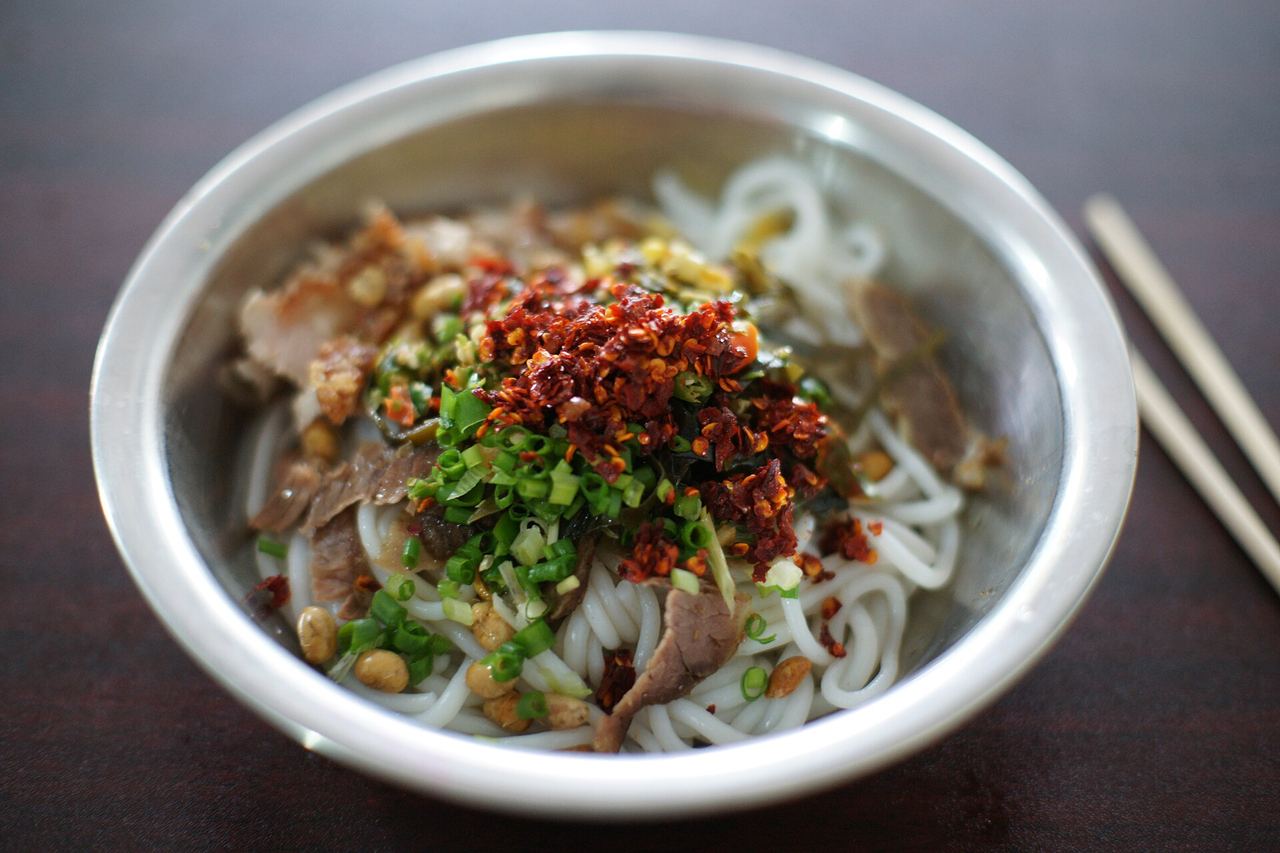
You’ll need fuel. Start the day the way everyone in Guilin does, with 桂林米粉 (Guìlín mǐfěn) — the city’s rice noodles, slick and bouncy, served in a light broth with pickled beans, peanuts, chilli and slices of beef or guobaorou (锅烧肉), the crisp-edged roast pork that’s the secret handshake of a good bowl. It’s a breakfast that costs less than a coffee and is finished in five minutes, standing at the counter if you’re in a hurry, which you won’t be.
In Yangshuo the headliner is 啤酒鱼 (píjiǔ yú) — river fish stewed in beer with tomatoes, chilli and spring onion, a dish that only exists because someone once decided the best cooking liquid for a fish caught beside this river was a bottle of the local lager. It works far better than it has any right to. Round it out with 油茶 (yóuchá) — the Zhuang and Yao “oil tea,” pounded tea leaves fried with ginger and garlic and poured over crispy rice and peanuts — if you want to taste the mountains as well as see them. For the full survival kit on ordering, menus and dietary needs, see our guide to eating in China.
Why you came
A short practical note to close, because we’re still that friend who wants the trip to actually work. Guilin has one airport, Liangjiang (KWL), about 30 km west of the city, and it’s a high-speed rail stop on the Guangzhou–Guiyang line — roughly two to three hours from Guangzhou, and well connected to Shenzhen and Hong Kong. One gotcha worth writing down: “Yangshuo station” is not in Yangshuo. It’s in Xingping, the ¥20-note town, a twenty-minute-plus ride from Yangshuo town itself — so check which station you’re actually booked to before you assume you’ll step off into the karst. (Our high-speed rail guide covers booking with a foreign passport.)
Sort your payment and connectivity before you land, the way you would anywhere in China — Guilin is fully covered by the country’s visa-free and transit policies. The golden windows are April–May and September–October; summer is hot and humid, and the winter “misty rain” season is when the peaks hide in cloud and the whole valley turns monochrome — beautiful, if you came for the painting rather than the picture.
But the real reason you came is the one you already knew. You’ll be standing on the deck of a bamboo raft, or on the ridge of a rice terrace, or on the bank of a river with a folded banknote in your hand, and the landscape will do the thing it’s been doing since long before anyone printed it on money. 桂林山水甲天下,阳朔山水甲桂林. The scenery really is best under heaven — you just have to ride the river far enough down to find it.
Image credits
Photos via Pexels (Pexels License): the Li River cruise — INDU BIKASH SARKER; misty peaks and Yangshuo countryside — fei wang; the Xingping view — Guillaume Kremer; bamboo raft — Vanessa G.; Longji rice terraces — Quang Nguyen Vinh. Guilin rice noodles — Popo le Chien (CC0) via Wikimedia Commons.