How to Use Toilets in China: Squat Toilets, Toilet Paper & Where to Find Them
On this page
The thing that surprises most first-time visitors to China is not the food or the crowds — it’s the toilet. Squat toilets, no paper in the stall, and a sign you can’t read. None of it is a real problem once you know what to expect. This page tells you where to find a clean one, how to handle a squat toilet, and what to carry so you’re never caught out.
The 30-second answer
- Carry your own tissue. Many public toilets don’t provide toilet paper in the stall, or only have a dispenser at the entrance. Tissues are the single most important thing in your day bag.
- Expect a squat toilet at tourist sites, train stations and older buildings; sit toilets in malls, hotels, airports and international chains.
- The easiest clean toilet is in a shopping mall — every floor has one, they’re free, and they’re almost always a sit toilet with paper and soap.
- Learn two characters: 男 (men) and 女 (women). That’s usually all you need to read.
- Maps can find one for you. Search “toilet” or “厕所” in Amap, Apple Maps or Baidu Maps.
Where to find a toilet
In most of urban China you are never far from one. In rough order of reliability:
- Shopping malls — the single best option. Every floor has a toilet, always free, usually a sit toilet with paper, soap and a hand dryer. Look for 卫生间 or 洗手间 on the floor signs.
- Hotels — any hotel lobby has a clean one. Walk in like you belong.
- Airports and train stations — always available, and usually well kept. High-speed rail stations have clean, modern toilets before the gate and on the train itself.
- Metro stations — larger, newer stations in big cities have toilets, but many don’t. If the station connects to a mall, use the mall’s.
- Tourist sites — every scenic area has toilets, usually at the entrance and at major stops inside. They’re the ones most likely to be squat toilets and to run low on paper.
- Fast food and coffee chains — McDonald’s, KFC, Starbucks and the like nearly always have one, though small local restaurants often don’t.
- Gas stations and highway service areas — basic but available on any road trip.
If you’re stuck, Amap (高德地图) and Apple Maps both list public toilets. Search “公共厕所” or just “toilet”, and the app will walk you there.
Squat toilets vs sit toilets
China uses both, and you’ll probably meet both on the same day. The split comes down to age and how “international” the place is:
- Squat toilets (蹲便器) — the classic. Common in tourist sites, train stations, metro stops, older neighbourhoods and local restaurants. They’re a porcelain basin set flush into the floor.
- Sit toilets (坐便器) — what you’re used to. Standard in hotels, malls, airports, new high-speed rail trains, and international chains.
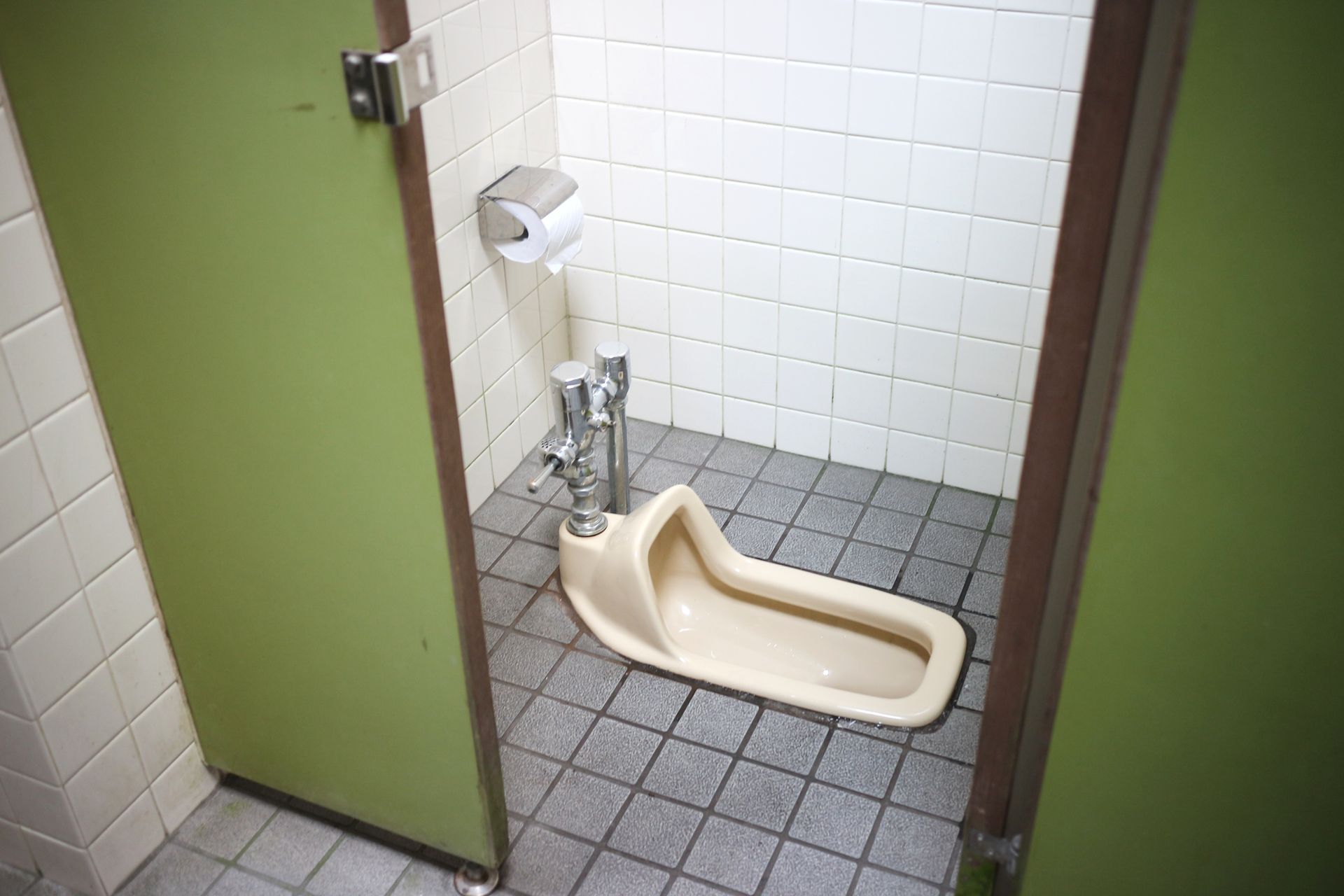
How to use a squat toilet: stand over the basin facing the hood (the raised end), drop your trousers to your knees, and squat down with your feet flat and your weight on your heels. Keep your feet planted — going up on your toes makes it much harder to balance. If there’s a grab bar or a wall, use it. A couple of tips that make it easier:
- Empty your pockets of your phone and anything loose before you squat — they fall out.
- Wear shoes you can squat in, and avoid loose, floor-length clothing.
- If balance or knees are a problem, look for the accessible toilet (无障碍卫生间) or a sit toilet instead. Malls and airports almost always have one.
There’s no technique to master — if you’ve ever squatted at a music festival, you already know how. It just takes a couple of tries to feel normal.
Toilet paper: bring your own
This is the one rule that catches everyone. Many public toilets in China do not put paper in the stall. Where there is paper, it’s often a single dispenser on the wall near the entrance, so you take what you need on the way in.
- Carry pocket tissues with you everywhere — restaurants, street food, and some hotel lobbies also don’t reliably have napkins or paper.
- Wet wipes are worth it for longer days out, especially with kids.
- Modern malls, airports and four- and five-star hotels usually provide paper and soap; don’t assume it anywhere older or busier.
There’s no shame in realising too late — every local has been caught out at some point. The fix is to always have a packet of tissues in your pocket.
Reading the signs
You don’t need Chinese to find a toilet, but three characters cover almost everything:
| Sign | Pinyin | Meaning |
|---|---|---|
| 厕所 | cèsuǒ | Toilet (most common) |
| 卫生间 | wèishēngjiān | Toilet / restroom |
| 洗手间 | xǐshǒujiān | Toilet / washroom |
| 男 | nán | Men |
| 女 | nǚ | Women |
| 无障碍 | wú zhàng’ài | Accessible toilet |
The words 厕所, 卫生间 and 洗手间 are used interchangeably — all three mean “toilet.” The men’s and women’s rooms are always marked with 男 and 女, usually alongside the familiar pictogram, so you can tell them apart at a glance. “WC” also appears sometimes, mostly in older signage.
How clean will it be?
Chinese public toilets have improved enormously over the last decade. Since 2015 the country has run a nationwide “toilet revolution” (厕所革命) — rebuilding tens of thousands of public toilets, and in many cities grading them with star ratings, much like hotels. Some toilets carry a sign with their star rating at the entrance.
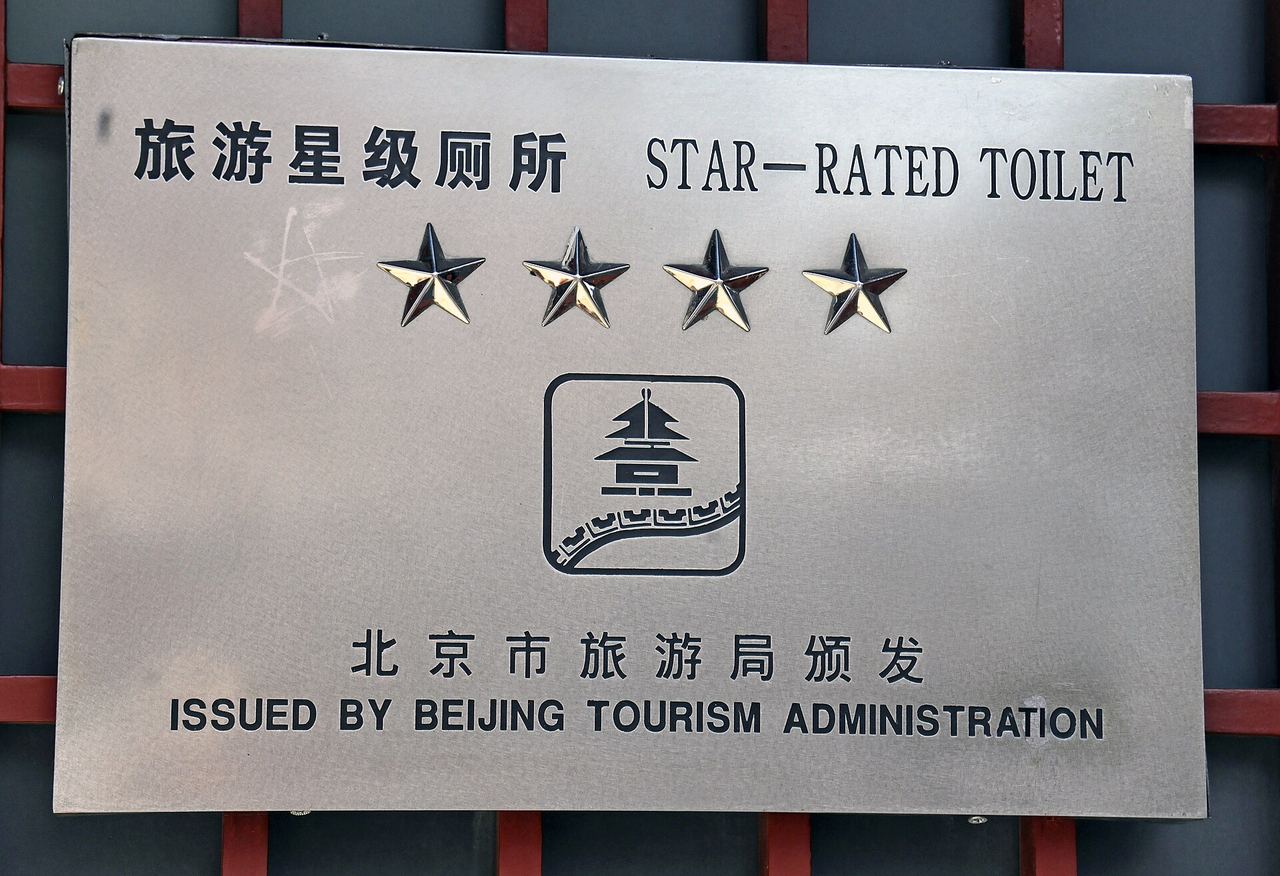
As a rough guide:
- Malls, airports, museums and new high-speed rail stations are reliably clean, with sit toilets, paper and soap.
- Tourist sites and metro stops vary — newer and pricier sites are usually good, older or rural ones more basic. Busy ones can run out of paper by late afternoon.
- Small towns and roadside stops can still be basic squat toilets. They work, but lower your expectations and keep your tissues handy.
A few habits help: carry hand sanitiser (soap and hand dryers aren’t always provided), and go when you see a clean one rather than waiting until the last minute.
Scene by scene
High-speed rail. Newer trains have sit toilets, older ones a mix. Paper is usually provided, but carry your own as backup. There’s a toilet at each end of every carriage.
Tourist sites. Toilets are at the entrance and the major stops, and are the ones most likely to be squat toilets. Queues build at peak times, so go early or between the big tour groups.
Hotels. Always western sit toilets with paper and soap, both in your room and in the lobby. If you’re out and about, any hotel lobby is a reliable free stop.
Restaurants and cafes. International chains always have a toilet; small local restaurants often don’t, or have a basic squat one out the back. If in doubt, head to the nearest mall.
Gas stations and service areas. Basic but usually present on highways. Quality varies a lot — treat them as an emergency option rather than a planned stop.
A few cultural notes
- Cleaning staff are often women who enter the men’s room. This is normal and they’re just doing their job — don’t be startled.
- Most public toilets are free. A very small number of older or rural ones still charge a small fee (usually ¥0.5–1), so keep a few small notes or coins handy just in case.
- Queuing is usually orderly. At busy sites there can be a line at the women’s room; join it rather than queue-jumping.
- Accessible and family toilets (无障碍 / 第三卫生间) are increasingly common in newer malls, airports and stations — useful if you have kids, a stroller or a lot of luggage.
Phrases to show
Save these or just point — showing the characters works better than pronouncing them.
| What you need | Chinese | Pinyin |
|---|---|---|
| Where is the toilet? | 请问,厕所在哪里? | qǐngwèn, cèsuǒ zài nǎlǐ? |
| Where is the restroom? | 请问,卫生间在哪里? | qǐngwèn, wèishēngjiān zài nǎlǐ? |
| Is there toilet paper? | 有卫生纸吗? | yǒu wèishēngzhǐ ma? |
| Thank you | 谢谢 | xièxie |
Tip: “请问,厕所在哪里?” (excuse me, where is the toilet?) is understood everywhere. If you’re shy about Chinese, just show the characters or search “厕所” on your map.
See all survival phrases: Survival Chinese Phrases
Pre-trip checklist
- Pack pocket tissues (and wet wipes for long days out)
- Carry a small bottle of hand sanitiser
- Download Amap (高德地图) or check that Apple Maps works for you in China
- Save the phrase “请问,厕所在哪里?” as a note or screenshot
- Remember: the cleanest, easiest toilet in any city is in a shopping mall
Keeping this page accurate
Toilet facilities across China are upgraded constantly — the “toilet revolution” is still ongoing, and what’s true in a big city isn’t always true in the countryside. We keep this page up to date: the date below shows when it was last checked. If you spot something out of date, contact us.
