Suzhou Travel Guide: Classical Gardens and Canal Lanes in 2–3 Days
East
On this page
Suzhou is the city China kept for its quieter self. No roller-coaster streets, no neon towers — just classical gardens designed to look like living paintings, canals running where the roads would be, and stone lanes that have been quietly lived in for 800 years. It’s calm, it’s green, and it’s the best place in the country to see what “the good life” meant to old China — while it’s still very much alive.
It’s also barely half an hour by train from Shanghai, which makes it the easiest trip in China. But don’t treat it as a checkbox. Suzhou rewards the slow afternoon — a teahouse, a canal view, a garden that keeps unfolding. Here’s the trip I’d hand to a friend.
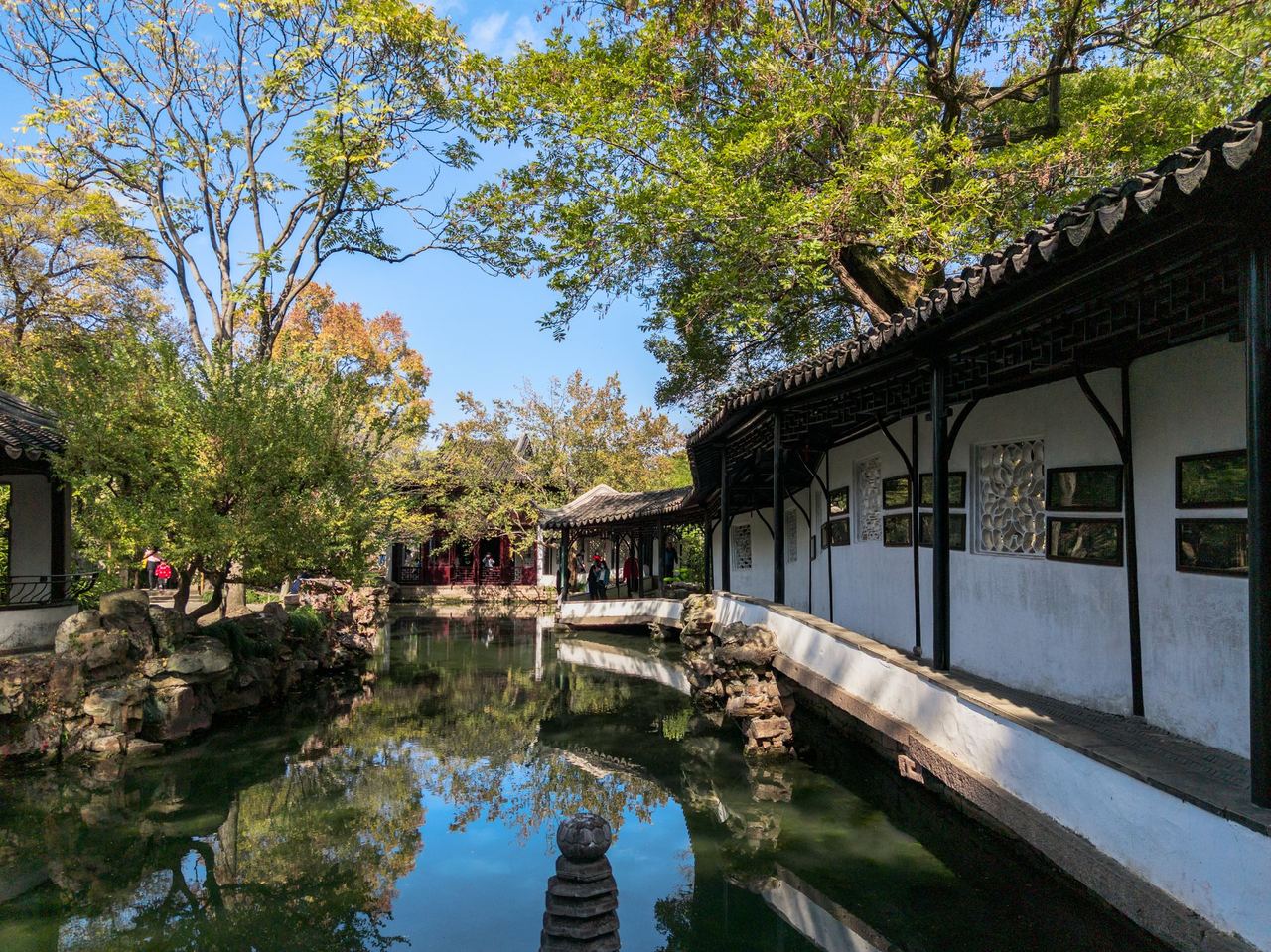
Why Suzhou feels like a slow exhale
There’s an old saying — “heaven above, Suzhou and Hangzhou below” (上有天堂,下有苏杭) — and the moment you step into a garden you’ll understand why. Suzhou was where wealthy scholars and retired officials poured their money into one very specific idea: a garden should be a three-dimensional landscape painting, something to be read, not just looked at.
You’ll see it everywhere — a window that frames a single plum tree, a path that hides the lake until you turn a corner. The Chinese term is “borrowed scenery” (借景), and once you learn to spot it, walking Suzhou becomes a different game. This is also the “Venice of the East” — a web of canals threaded through the old town, crossed by little stone bridges. Bring comfortable shoes and zero hurry.
When to go
Spring (March–May) and autumn (September–November) are the sweet spots. In spring the gardens burst with blossom; in autumn the osmanthus flowers and the air turns cooler.
Autumn has a delicious bonus: it’s hairy crab (大闸蟹) season, roughly September to November, and Suzhou — especially nearby Yangcheng Lake — is ground zero. If you can time your trip for it, book a crab dinner.
Summer is hot and humid, and the gardens are at their most crowded. Winter is cold and often grey, but the crowds thin out and a light dusting of snow on a garden pavilion is quietly magical.
A small confession: the gardens are popular for a reason. Go right when they open (most open around 7:30–8:30), and you’ll have the best ones almost to yourself for a precious hour.
Getting in and where to stay
The easy way is by high-speed rail from Shanghai. From Shanghai Hongqiao it’s about 25–30 minutes to Suzhou Railway Station, and tickets are cheap (¥40-ish). Suzhou also has an airport nearby — Sun’an International (WUX) serves the Suzhou–Wuxi area, or you can fly into Shanghai and train over.
For a short stay, base yourself in the old town — the area around Guanqian Street (观前街) or along Pingjiang Road puts most of the classics within walking distance. Budget-wise: hostels ¥50–100, boutique courtyard hotels ¥300–600, and upmarket garden-style hotels ¥800+. If you want to wake up to a canal outside your window, book a guesthouse on Pingjiang Road or Shantang Street.
Day 1: the gardens and the old lanes
Morning · Humble Administrator’s Garden
Start with the biggest and most famous: the Humble Administrator’s Garden (拙政园), a UNESCO World Heritage site and the classic you’ve probably seen in a hundred photos. It’s more park than garden in places — lotus ponds, zig-zag bridges, and pavilions with names like poetry.
Go early, wander slowly, and don’t try to “cover” it. The point is the pacing — a window here, a borrowed view there.
Afternoon · Suzhou Museum and Pingjiang Road
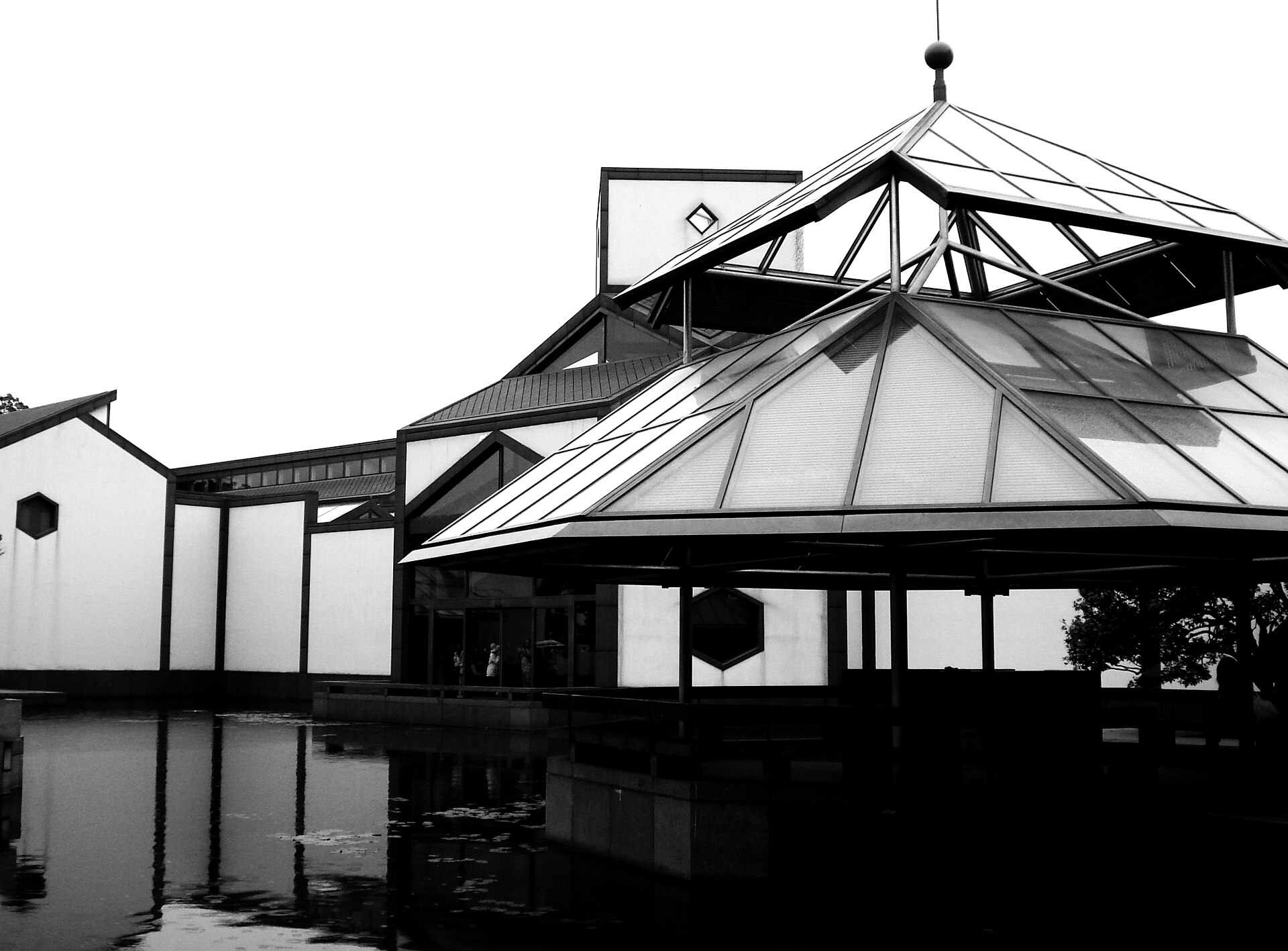
Next door is the Suzhou Museum (苏州博物馆), designed by I. M. Pei — whose family came from Suzhou — in a striking mix of white walls, grey roofs and geometric calm. It’s free but you need to book a ticket in advance. Even if you skip the inside, the building itself is worth the look.
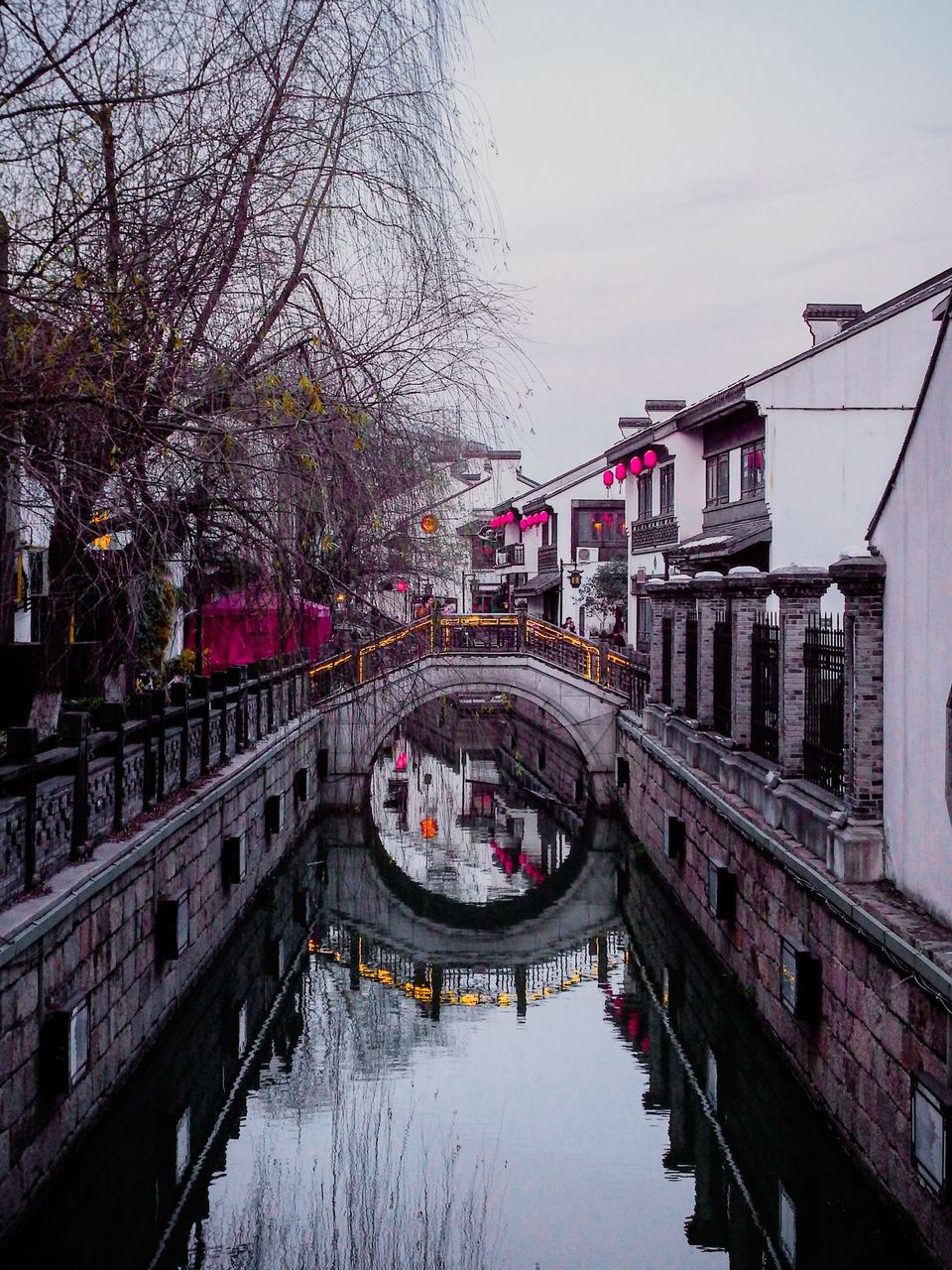
Then walk south into Pingjiang Road (平江路), an 800-year-old canal street that feels like Suzhou in miniature: stone bridges, tea houses, little shops selling silk and fans, and old men playing pingtan ballads from open windows. This is the street to get lost on.
Evening · pingtan and a slow dinner
Find a teahouse and sit through a pingtan (评弹) performance — Suzhou’s own storytelling-and-ballad art, sung in the local dialect to a pipa lute. You won’t understand a word; the melody and the atmosphere are the point. Pair it with a quiet dinner and an early night — tomorrow has a hill to climb.
Day 2: Tiger Hill and a boat ride
Morning · Tiger Hill
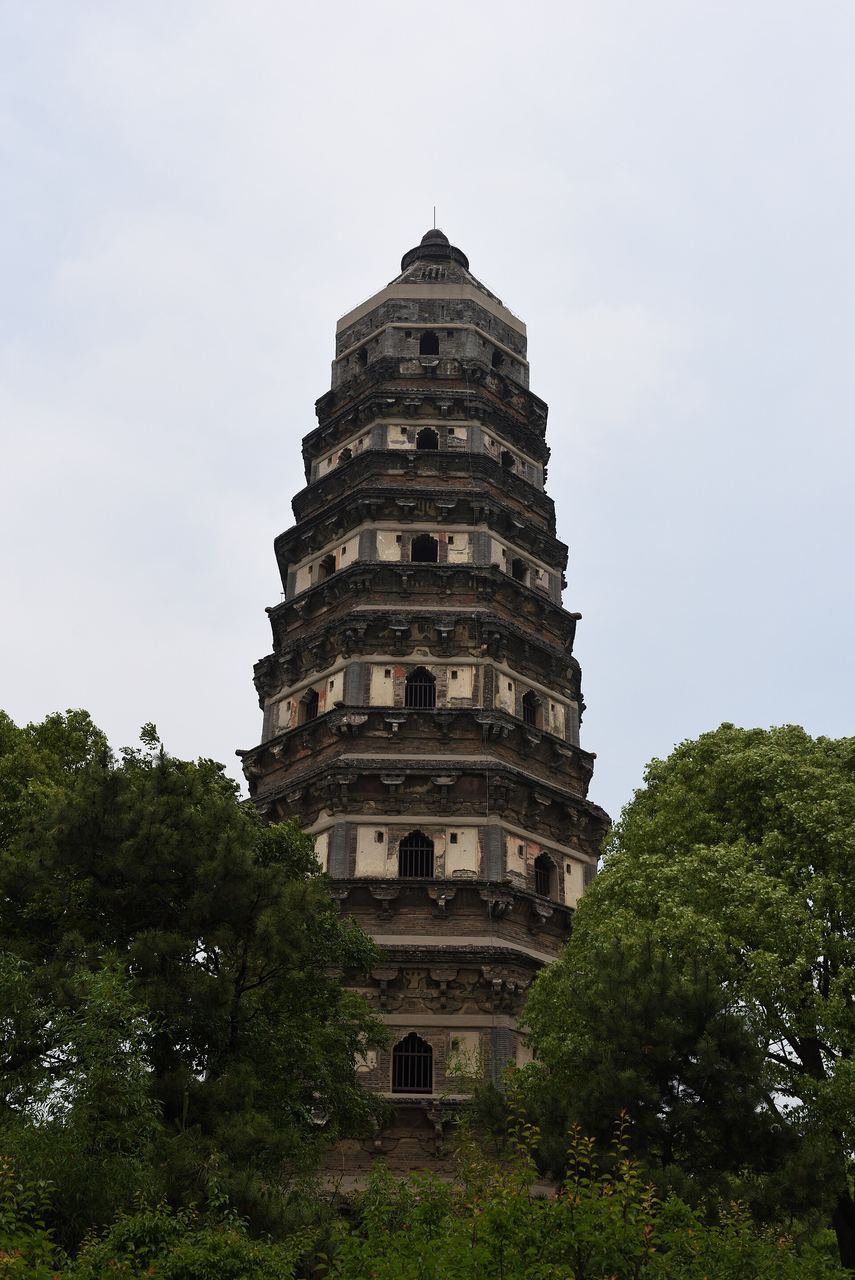
Tiger Hill (虎丘) is the symbol of Suzhou and one of the oldest sights in the city — legend says it’s the burial place of the King of Wu, guarded by a white tiger. Its star is the Yunyan Pagoda (云岩寺塔), a thousand-year-old brick tower that leans a full few degrees — Suzhou’s answer to Pisa. The hill itself is a pleasant wooded climb past ancient gates and springs.
Afternoon · Lingering Garden or Shantang Street
Take your pick. The Lingering Garden (留园) is another UNESCO garden, smaller and more intimate than the Humble Administrator’s, famous for how it layers spaces so a small plot feels endless.
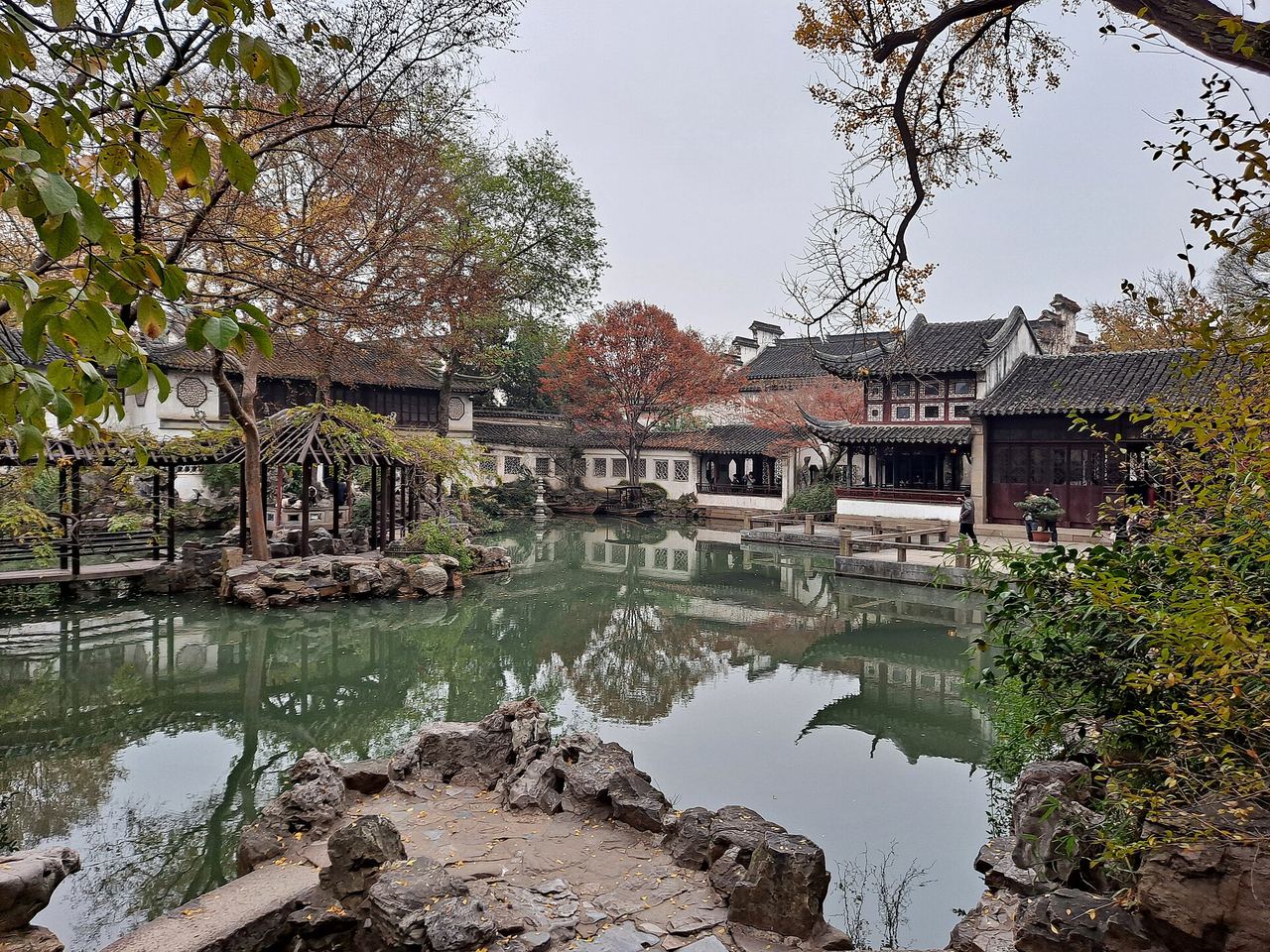
Or, if you’d rather walk than garden-hop, head to Shantang Street (山塘街) — “Seven-Li Shantang” — the canal street that emperors have praised since the Tang dynasty.
Evening · a night garden or a canal boat
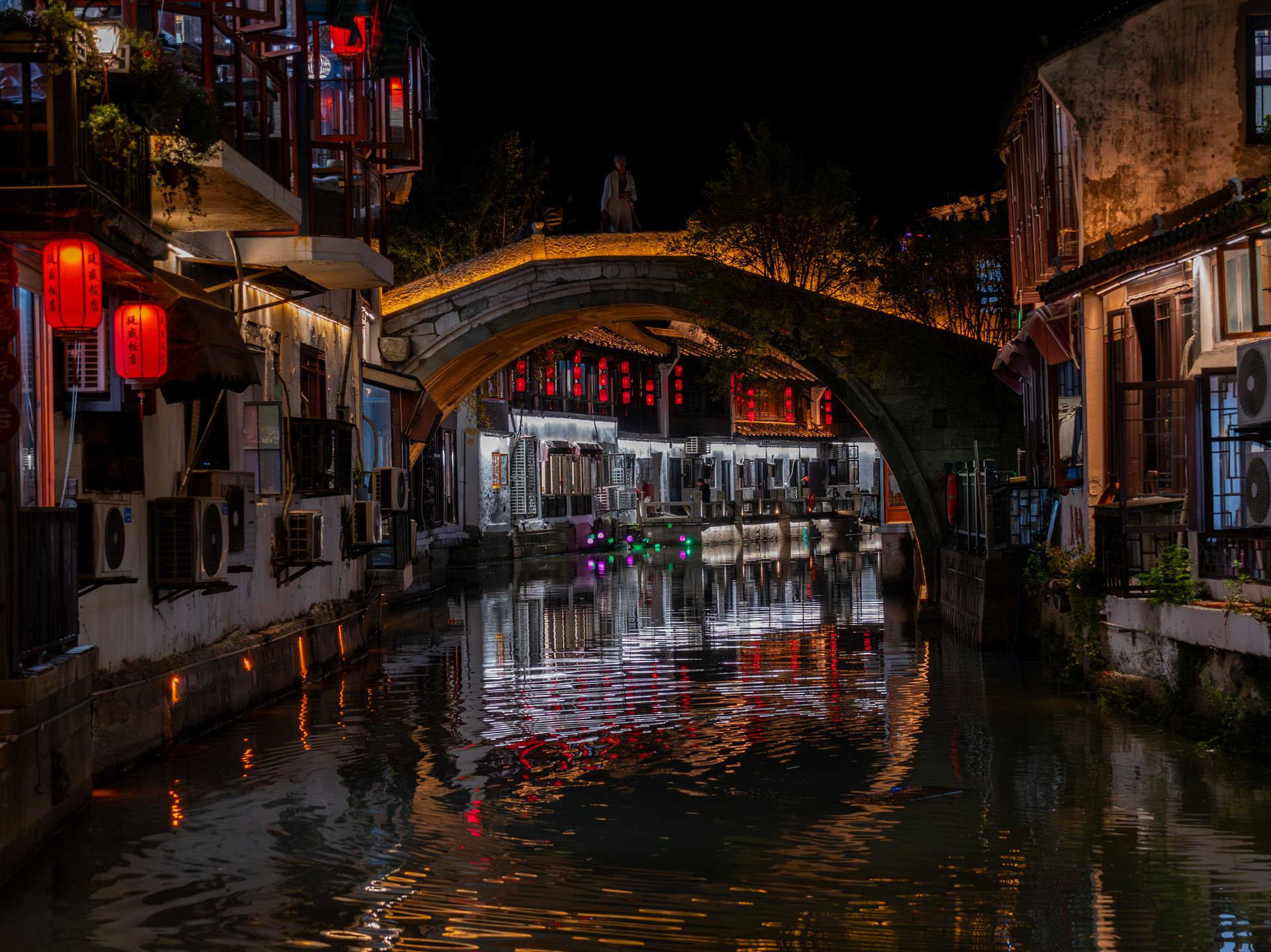
Two lovely ways to close the day. The Master of the Nets Garden (网师园) runs a night garden — intimate performances of kunqu opera and pingtan staged among the lit pavilions, which many find more magical than the daytime version. Or take an evening canal boat along the old waterways and watch the stone bridges glow.
Day 3 (optional): a water town day trip
Have an extra day? The water towns around Suzhou are the postcard version of the “Venice of the East”:
- Zhouzhuang (周庄, ~1 hour) — the most famous and most photographed, with its twin bridges and gondola-like boats. Go early or late to dodge the tour groups.
- Tongli (同里, ~40 minutes) — quieter and less commercial, seven islands linked by bridges; it feels more like a real town than a film set.
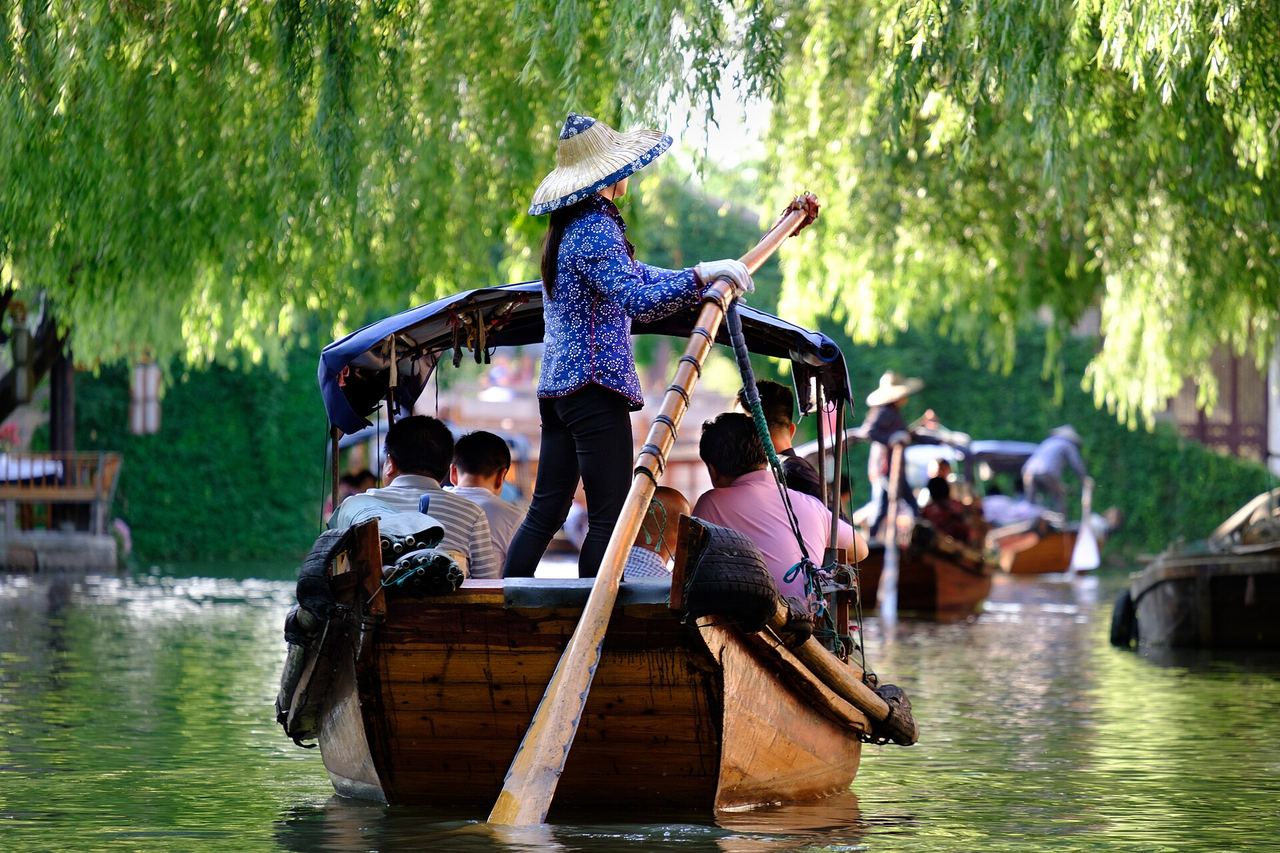
Both are reachable by bus or metro-plus-bus, or on a half-day tour.
What to eat — the shortlist
Suzhou cuisine (苏帮菜) is famously sweet — a deliberate contrast to the fiery food of the southwest. Keep an eye out for:
| Dish | Pinyin | What it is |
|---|---|---|
| 松鼠桂鱼 | sōngshǔ guìyú | Sweet-and-sour mandarin fish, shaped like a squirrel |
| 大闸蟹 | dàzháxiè | Hairy crab — autumn only, steamed with ginger vinegar |
| 响油鳝糊 | xiǎngyóu shànhú | Eel sizzled in hot oil and garlic |
| 苏式面 | sūshì miàn | Suzhou-style noodles in a light, savoury broth |
| 桂花糖藕 | guìhuā táng’ǒu | Lotus root stuffed with sticky rice, in osmanthus syrup |
| 碧螺春 | bìluóchūn | Biluochun green tea, from nearby Dongshan |
| 卤汁豆腐干 | lǔzhī dòufugān | Soy-braised tofu, the classic street snack |
| 苏式糕点 | sūshì gāodiǎn | Suzhou pastries — plum-blossom and crabapple cakes |
For the full story on ordering, dietary needs and menu survival, see our guide to eating in China.
Practical tips (Suzhou edition)
| Thing | Our advice |
|---|---|
| Tickets | Gardens need tickets (¥40–80); the Suzhou Museum is free but book online first. |
| Timing | Hit gardens at opening time to avoid the tour groups. |
| Getting around | The old town is walkable; Metro Lines 1 and 4 cover the main sights. |
| Canal boats | Book an evening ride — the waterways are prettiest after dark. |
| Tipping | Not a thing. Don’t worry about it. |
| Weather | Bring an umbrella in spring (rain) and summer (humidity). |
| Photo spots | Pingjiang Road at dusk, the garden windows, Tiger Hill’s pagoda, Shantang at night. |
| Handy phrases | “多少钱” (how much), “好吃” (delicious), “谢谢” (thanks), “卫生间” (restroom). |
Image credits
Photos via Pexels (used under the Pexels License — attribution appreciated but not required): Humble Administrator’s Garden — 清风 明月; Pingjiang Road — Budi jainal Mutaqin; Shantang Street at night — Vind 🌙. Suzhou Museum — Roger Hsu (CC BY 2.0, via Wikimedia Commons); Tiger Hill pagoda — Siyuwj (CC BY-SA 4.0, via Wikimedia Commons); Zhouzhuang — Kristoffer Trolle (CC BY 2.0, via Wikimedia Commons); Lingering Garden — 钉钉 (CC BY-SA 4.0, via Wikimedia Commons).