Jiuzhaigou, Sichuan: The Water That Broke the Sky
Southwest
On this page
There is a moment, the first time you look down into a Jiuzhaigou lake, when you quietly stop trusting your eyes. The water is not water. It is turquoise glass, and jade, and melted sapphire all at once, and it is so clear you can count the trunks of trees that fell decades ago and never rotted, standing straight on the bottom as if they had simply been kept there for you.
People in Sichuan have a saying for places like this: the mountains are for Huangshan, the water is for Jiuzhaigou (九寨归来不看水) — once you have seen the water here, no other water will quite do. It sounds like an exaggeration. It isn’t. Here is the trip I’d hand to a friend, told as a walk, because Jiuzhaigou is not a list of sights. It is one long, slow walk beside water that keeps changing its mind.
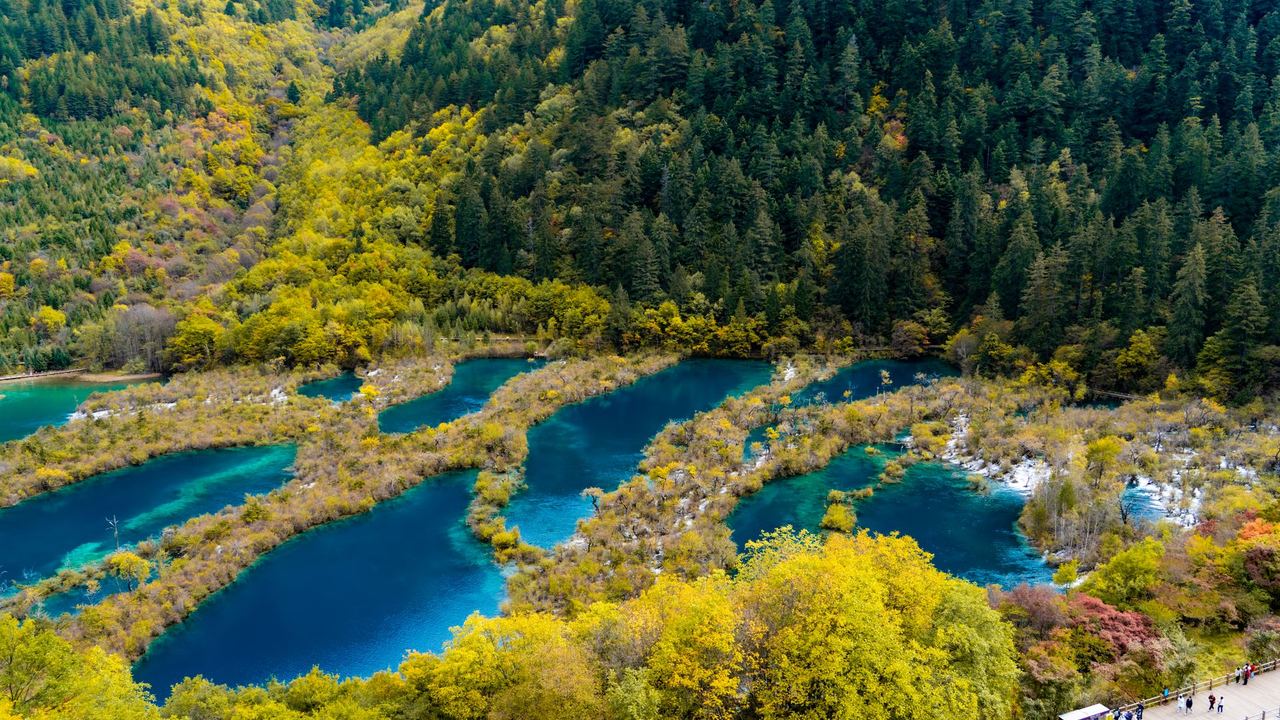
Why the water glows
Let me get the science out of the way, because it makes the magic better, not worse. The valley sits on limestone, and the water here is loaded with dissolved travertine. Over thousands of years it has painted the lake beds a chalky white, and that white floor does something to the light: it bounces the blue-green wavelengths straight back up at you while the water stays almost impossibly clean. Sunlight, depth, a little algae, a lot of minerals — the result is that colour, a shade of teal that looks photoshopped even when you’re standing in it.
The locals have their own explanation, and I prefer it. To the Tibetan people who have lived in this valley for centuries, these lakes are “haizi” (海子) — little seas. A landlocked mountain people looked at a blue they had no word for and named it after the sea they had never seen. There’s an older legend too: a goddess dropped her mirror woven from wind and cloud, and where it shattered, the shards became the lakes. Walk through the valley and you’ll believe both stories at once.
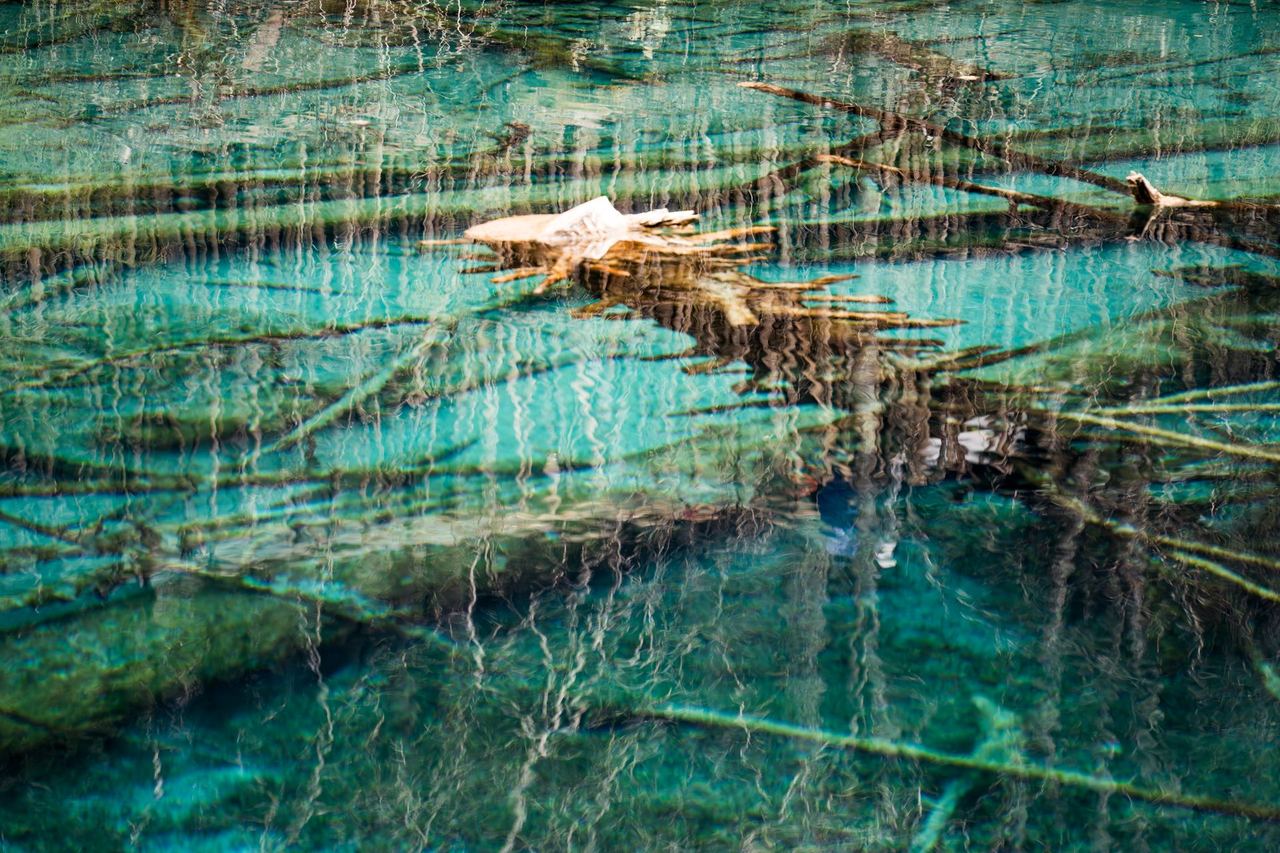
The shape of the valley
The valley is a Y. Three gullies come together at a hub called Nuorilang (诺日朗) — which means, roughly, “magnificent” in Tibetan, and earns the name. The shuttle buses run up each arm, and the trick to the whole place is simple: ride to the top, then walk back down. The buses are hop-on, hop-off, so you never have to climb if you don’t want to. You’re between 2,000 and 3,100 metres for most of it — high enough to notice, low enough that almost nobody gets sick.
Here’s the thing to know before you go: one day is enough to love Jiuzhaigou, but two is enough to actually feel it. With one day, you’ll cover the highlights and leave aching to come back. With two, you’ll walk the boardwalks slowly, eat without checking your watch, and start to notice what the photos can’t show — the smell of cedar and cold water, the way the air sounds different near a waterfall, the particular silence of a lake that has nothing to do but reflect.
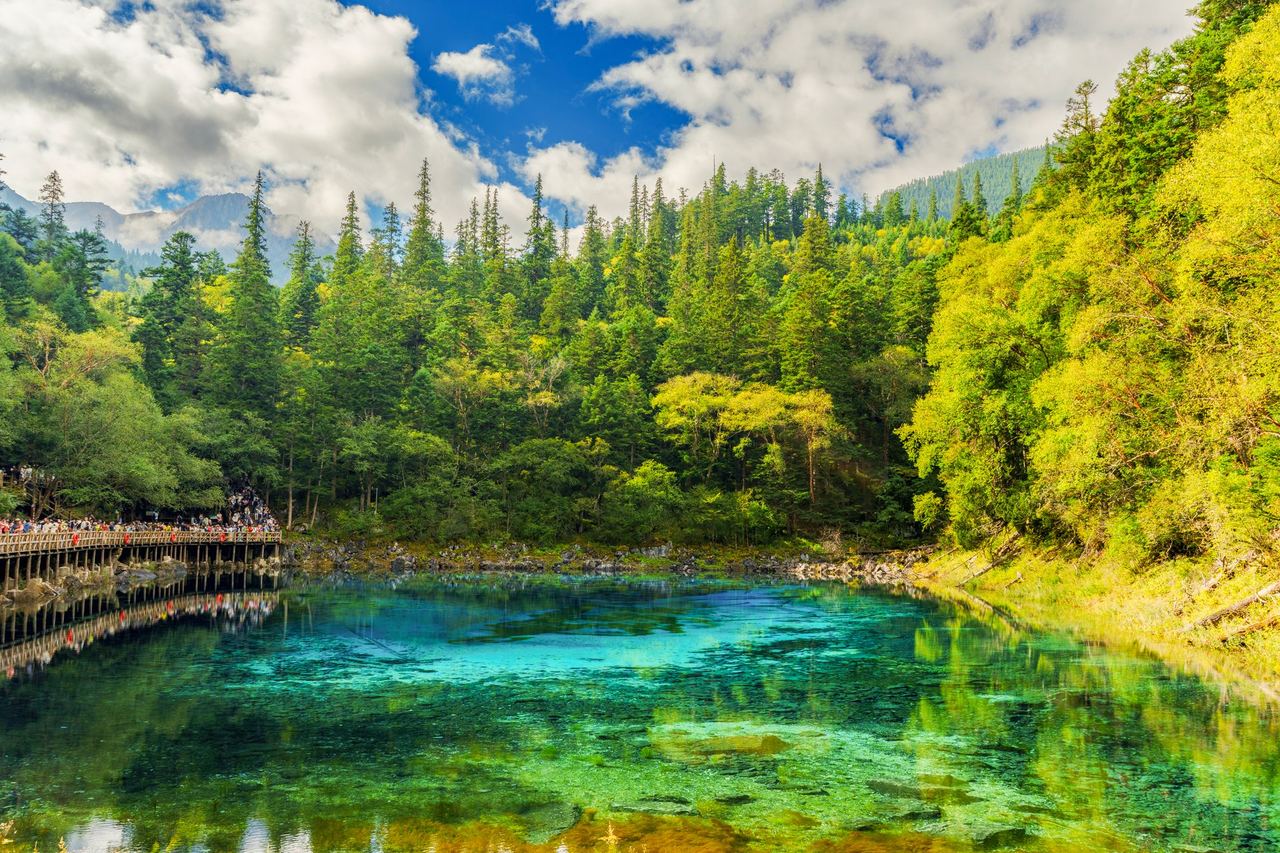
The lakes you came for
Every lake here is a different note of the same impossible chord. A few you should not miss:
- Five Flower Lake (五花海) — the one on every postcard. Stand on the boardwalk and look straight down: you’ll see fallen trunks, mineral fans, and a dozen shifting colours in a single glance. Go early, before the tour groups, while the surface is still a mirror.
- Five-Colour Pond (五彩池) — tiny, jewel-bright, almost too saturated to be real. You’ll share the walkway for this one; it’s worth the wait.
- Mirror Lake (镜海) — find it on a windless morning and the reflection is so exact that the mountain appears to be standing on its head, and you’re not sure which way is up.
- Long Lake (长海) — the biggest and highest, a deep blue that doesn’t quite match the others, ringed by snow peaks in the cold months.
- Shuzheng Lakes (树正群海) — not one lake but a staircase of dozens, each spilling into the next like a string of pale-green pearls down the valley.
The reason the water stays this clear is almost as strange as the colour: the same minerals that whiten the lake bed fuse fallen wood before it can rot, so the drowned trees stand intact for years, bleached and still, like a forest in waiting. That’s what you’re seeing down there — not decay, but a kind of preservation.
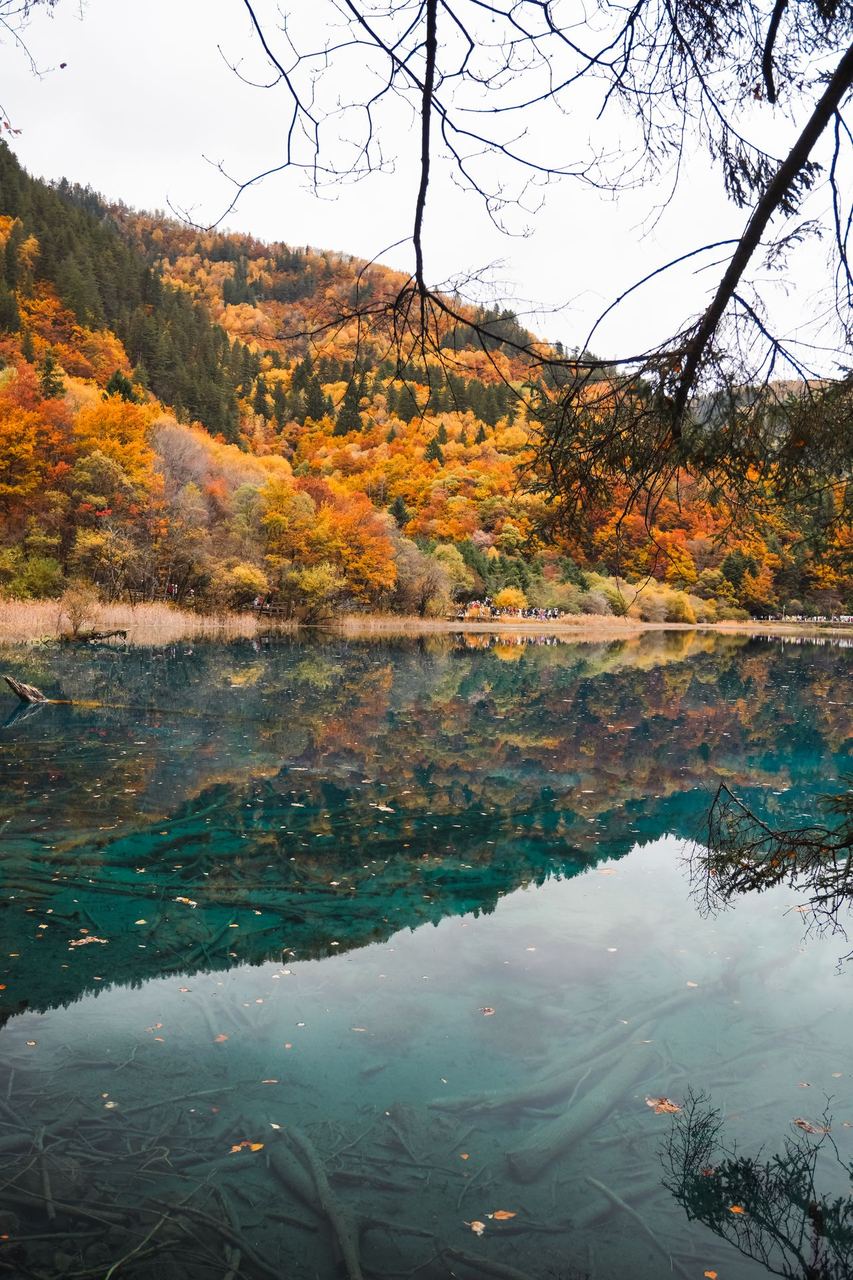
Where the water finally moves
Stillness is only half the story. At the two great waterfalls, the valley stops whispering and starts to roar.
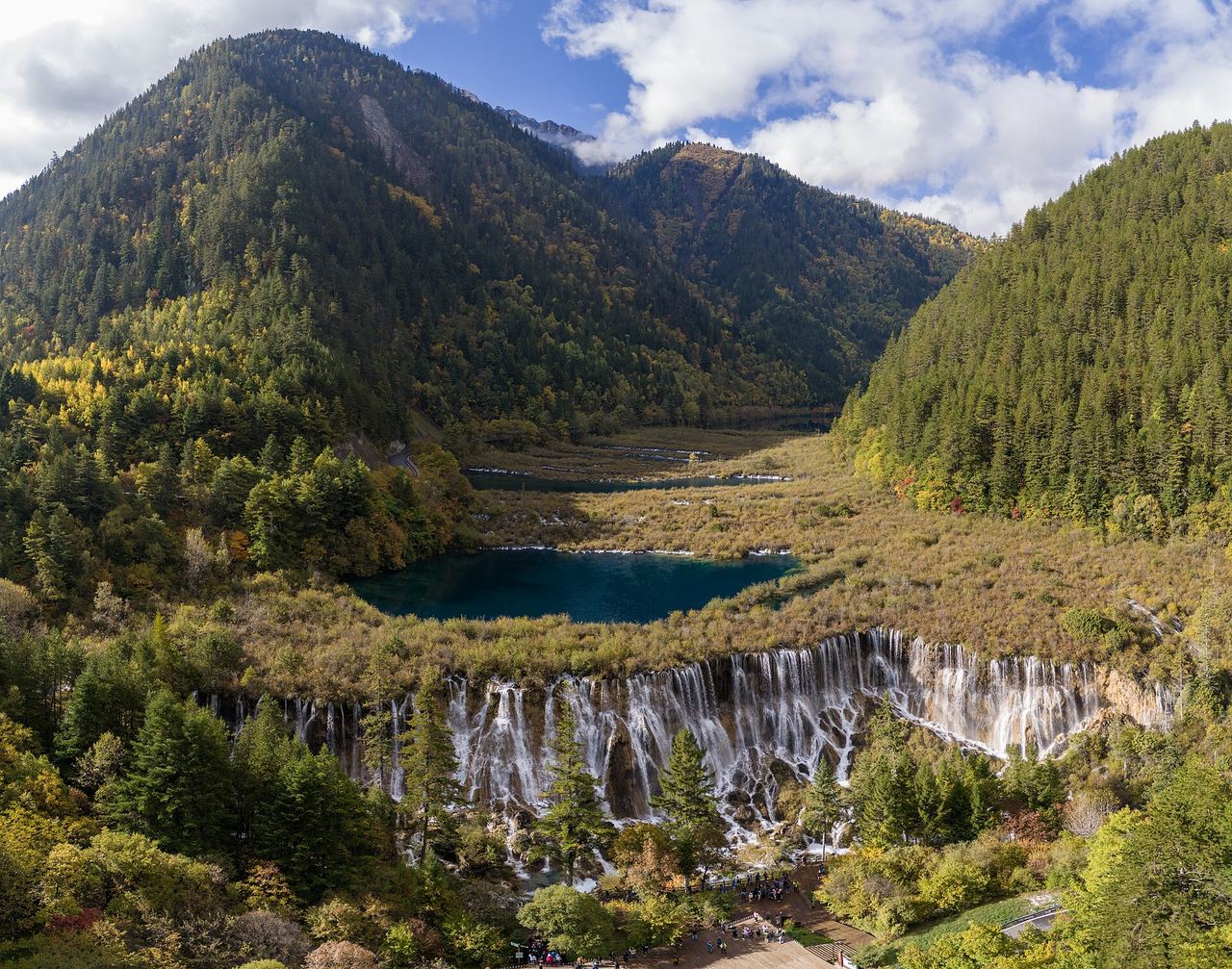
Nuorilang Waterfall (诺日朗瀑布) is the widest travertine waterfall in China — a long, low curtain of white water pouring over a stone lip. It collapsed in the 2017 earthquake and was rebuilt, stone by local stone, until it fell again. The name means “magnificent,” and standing at its foot in the spray, you’ll feel it earned the word twice over.
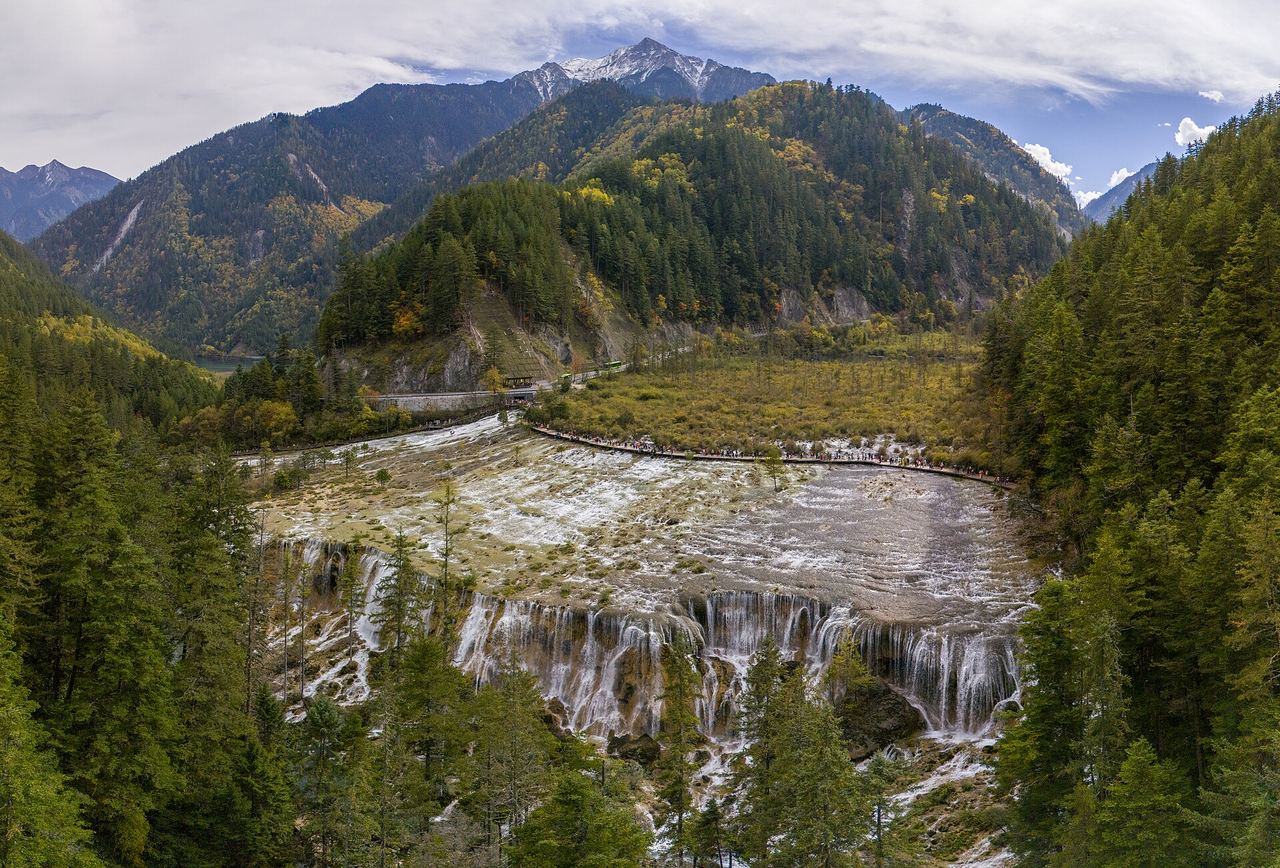
Then there’s Pearl Shoal (珍珠滩), which is something else entirely — not a fall so much as a wide, shallow hillside where the water slides over a skin of travertine and breaks into ten thousand white beads. A boardwalk lets you stand right in the middle of it, mist on your face, the whole mountain pouring past your feet. This is the stretch that ended up in the film Journey to the West, and you’ll understand why the moment you see it.
The nine villages
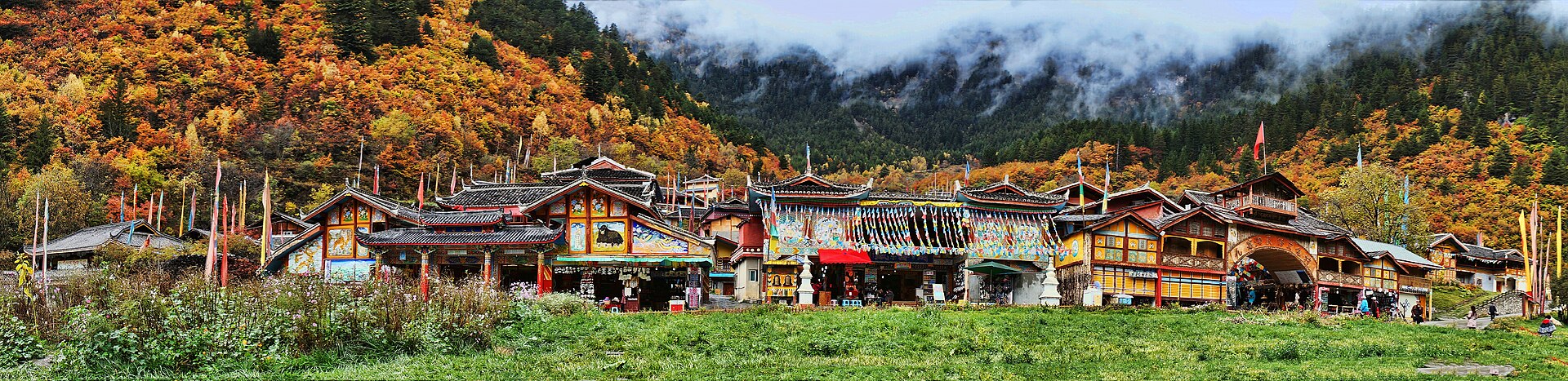
The name Jiuzhaigou means “Nine Village Valley,” after the nine Tibetan villages that once stood here. Most have moved out of the park now, but Shuzheng Village (树正寨) remains — whitewashed walls, red timber, prayer flags strung on the slopes, a water mill turning in the shallows. It’s a small, useful reminder: for the people who grew up here, this wasn’t scenery. It was the view out the window, and the haizi were the only sea they’d ever know.
When to go — the honest version
Autumn is the answer everyone gives, and it’s a real answer: the colour peaks around mid to late October, and for those weeks the valley is almost too beautiful to believe. It is also the busiest and priciest time, so a small confession — avoid Golden Week (the first week of October) unless you enjoy sharing the boardwalk with half of China.
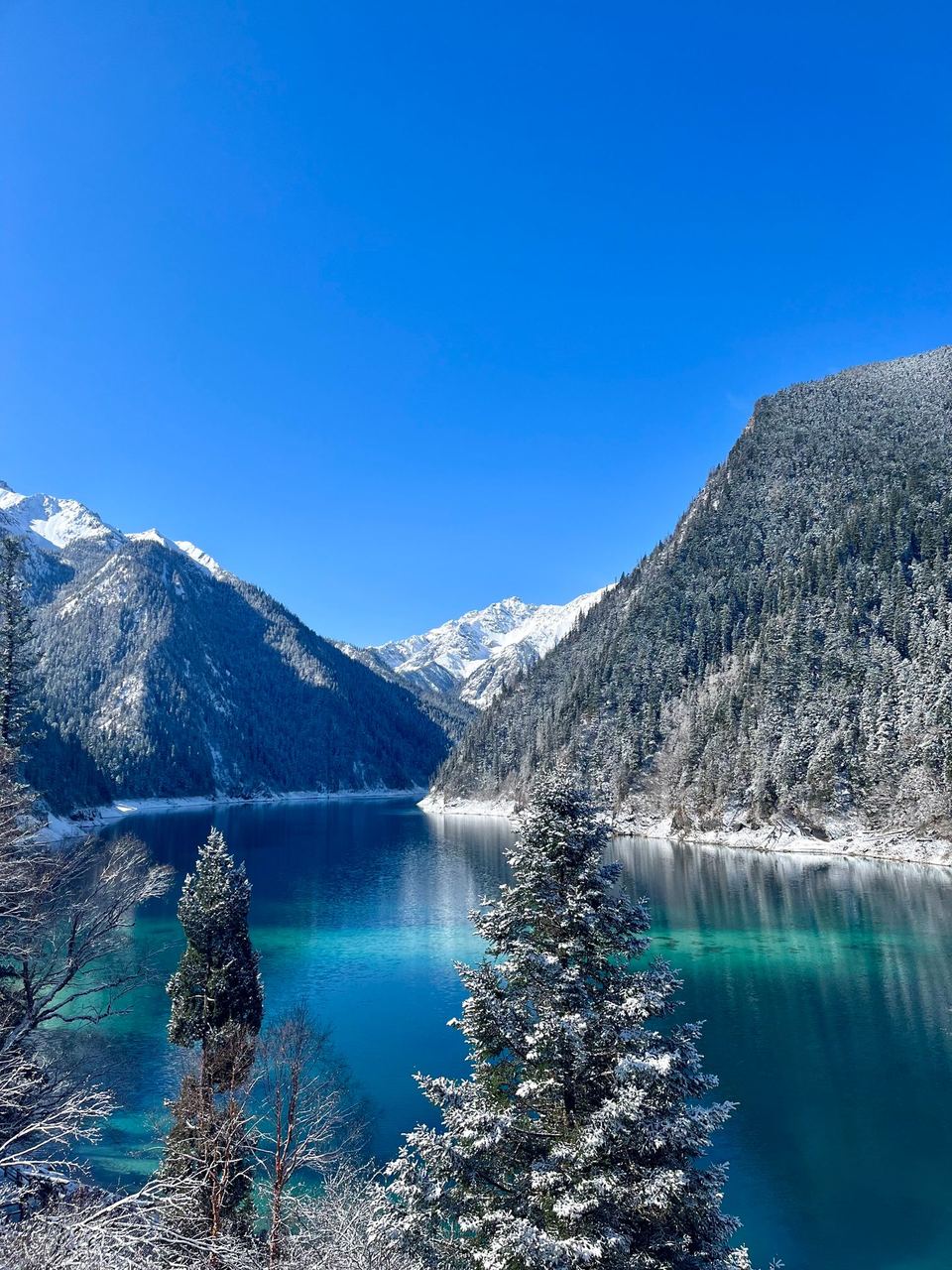
My favourite season is actually winter. The waterfalls freeze into blue ice, the lakes steam faintly in the cold, snow dusts the forest, and the crowds vanish. A few high lakes may close for ice safety, so check at the visitor centre — but what remains open feels almost private. Spring comes late at this altitude and is lush and green by May; summer is the rainy season, when everything runs full and the forest smells of wet cedar.
Getting there
The old answer was a long, winding bus ride. The new answer is a high-speed train.
Since 2024, the Chengdu–Lanzhou railway has reached the mountains, and you can now ride from Chengdu East to Huanglong Jiuzhai station (黄龙九寨站) in about 1 hour 40 minutes. From there a shuttle bus covers the final stretch to the park entrance in roughly two hours. There’s also Jiuzhai Huanglong Airport (JZH) — faster still, but it sits at 3,448 metres and the weather can be fickle, so the train is the gentler bet for most people. Plan the last leg ahead: the station isn’t at the gate, and the shuttle is what connects the two.
Where to stay
You can no longer sleep inside the park — the rule now is “tour the valley by day, stay outside at night.” That’s fine, because Zhangzha town (漳扎镇), just outside the gate, is built entirely for this. Hostels run ¥110–350, comfortable hotels ¥300–600, and a handful of high-end names (Banyan Tree, Hilton, InterContinental) stretch from ¥800 up. Want to wake up with forest outside instead of a street? Look at the Ganhaizi (甘海子) resort area, twenty to thirty-five minutes from the gate.
Tickets and practicals
This is the part where a little planning pays off, because Jiuzhaigou does not sell tickets at the door. Everything is booked online, in your real name, with a passport number, and the park caps entry at a set number of visitors each day. Book through Trip.com or the official platform — Trip.com is the easier route for foreign cards. Peak season (April to mid-November) runs roughly ¥280 all-in (entrance plus shuttle); off-season (mid-November to March) drops to about ¥160. Say “Jiǔzhàigōu” slowly and book early; the same-day ticket is not something to count on.
A few things to know:
- Altitude — the valley floor is about 2,000 m and the high point, Long Lake, about 3,100 m. Most people feel fine; take it easy on the uphill bits.
- No drones, no swimming, no smoking — and the fines for ignoring this start at ¥500. The water is for looking at. (You’ll want to, anyway.)
- Two days beats one — if you can, split the valley across two mornings and keep the pace slow. That’s the whole point.
If you have a day to spare: Huanglong
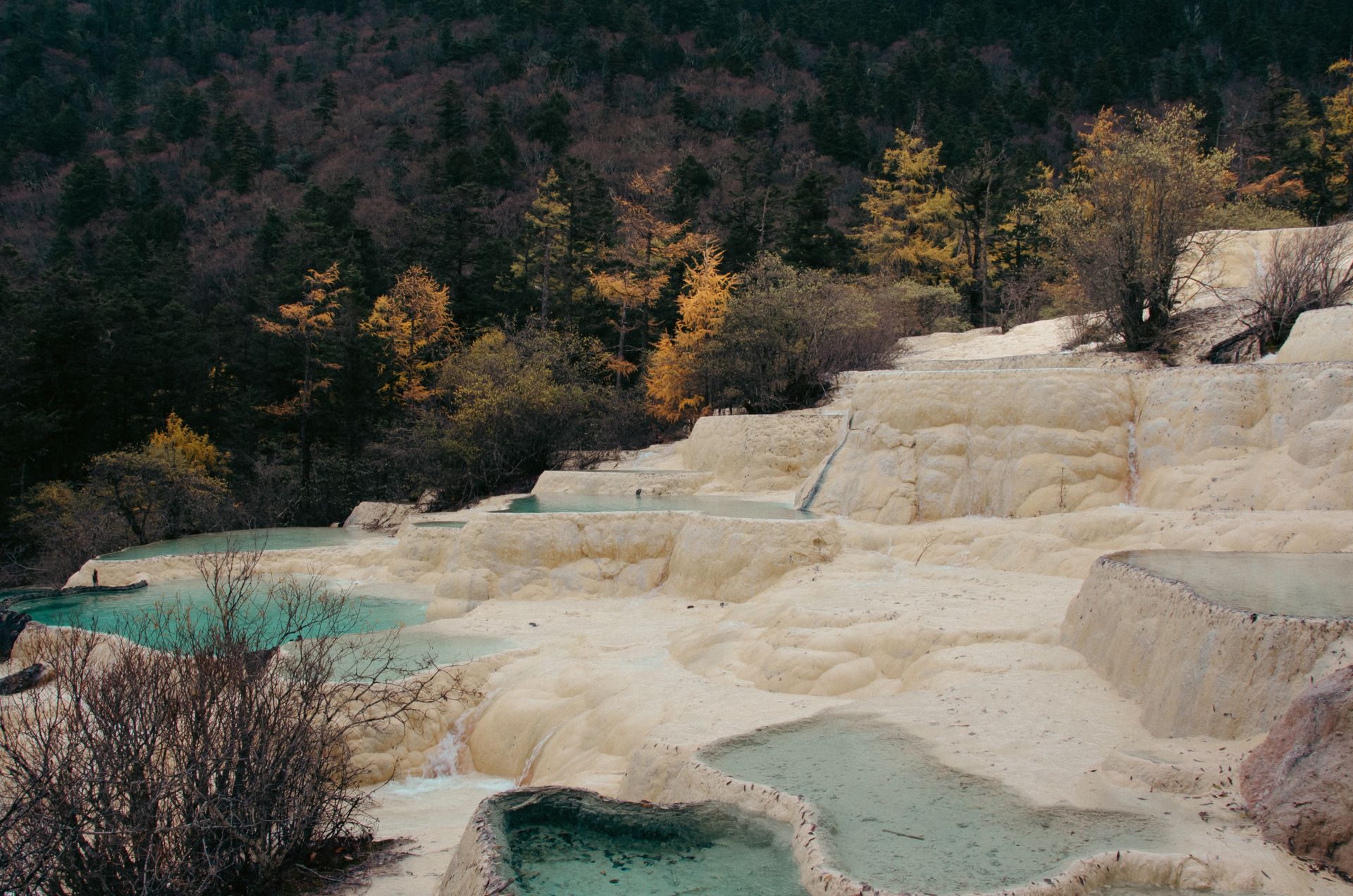
An hour-and-a-half to three hours away sits Huanglong (黄龙), Jiuzhaigou’s older, higher sibling. Where Jiuzhaigou is lakes, Huanglong is a staircase of pale-blue travertine pools terraced down a mountainside — like a frozen waterfall of colour. The cable car (open in peak season, closed in winter) cuts the climb, and the walk down past the pools is the payoff. It’s noticeably higher than Jiuzhaigou — up near 3,900 metres at the top — so go slowly. Nearby Songpan, an old garrison town near the new station, makes a gentle overnight base for both parks.
Practical tips (Jiuzhaigou edition)
| Thing | Our advice |
|---|---|
| Tickets | Book online in advance — no on-site sales, daily cap, real-name with passport. |
| Timing | Enter when the park opens and ride straight to the top, then walk down ahead of the crowds. |
| Getting around | Shuttle buses are hop-on, hop-off and included in your ticket. |
| Two days | Split the valley across two mornings; one day is a sprint, two is a walk. |
| Weather | Layers and a rain shell — mountain weather changes fast even in October. |
| Altitude | ~2,000–3,100 m. Easy for most, but don’t sprint the climbs. |
| Rules | No drones, swimming or smoking. Fines from ¥500. |
| Handy phrases | “多少钱” (how much), “谢谢” (thanks), “卫生间” (restroom), “九寨沟” (Jiuzhaigou). |
Image credits
Photos via Pexels (used under the Pexels License — attribution appreciated but not required): valley aerial — Lin.; Five Flower Lake — David Tran; clear water — Chris Duan; autumn reflection — Kent Chin; winter lake — Rick Lu; Huanglong terraces — Jan Dvorak. Wikimedia Commons: Nuorilang Waterfall and Pearl Shoal — Chensiyuan (CC BY-SA 4.0); Five-Colour Pond — Benjamin Ceci (public domain); Shuzheng Village — chensiyuan (CC BY-SA 4.0).