Eating Vegetarian in China: How to Avoid the Hidden Meat
On this page
Vegetarians in China face a specific problem: the words for “vegetable dish” and “vegetarian dish” are not the same thing. A plate of stir-fried greens can be cooked in meat stock and lard, seasoned with oyster sauce, and topped with a scatter of minced pork. For most vegetarian visitors, the main difficulty is not a shortage of meat-free options, but accidentally eating animal products hidden in dishes that look vegetarian.
This guide focuses on one thing: how to spot and avoid those hidden animal ingredients, and how to find food that is genuinely vegetarian.
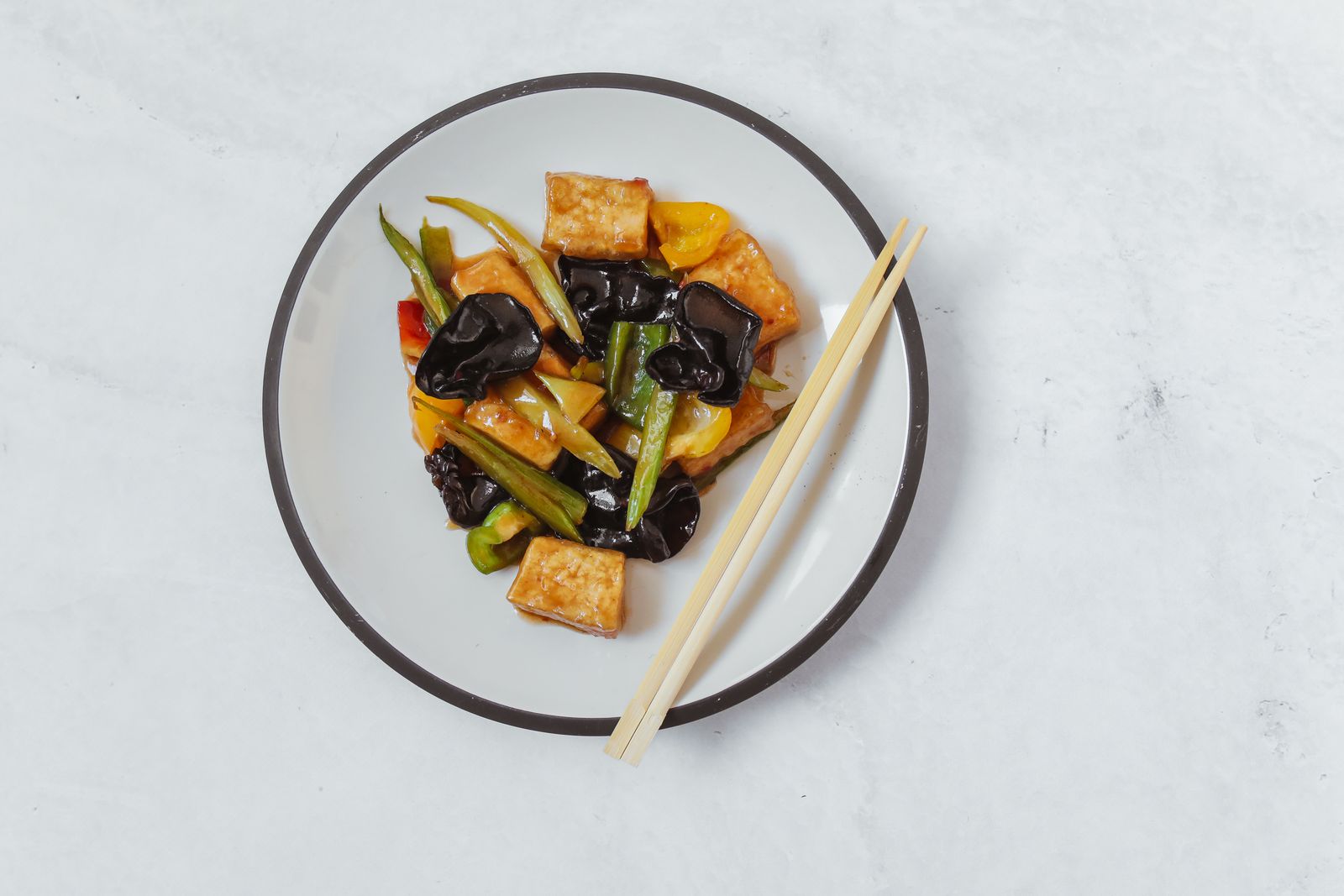
The core problem: 素 (sù) does not always mean vegetarian
In Chinese, the character 素 (sù) is used for several different diets. It is worth knowing which one applies, because the word alone does not guarantee what you expect:
- 素食 (sùshí) — vegetarian food in the general sense: no meat or fish.
- 净素 (jìngsù) — “pure” Buddhist vegetarian: no meat, fish, eggs or dairy, and also no “five pungent roots” (garlic, onion, leek, chive and asafoetida). This is stricter than vegan.
- 蛋奶素 (dànnǎisù) — ovo-lacto vegetarian: no meat or fish, but eggs and dairy allowed.
Most restaurants serving 素菜 fall into the general vegetarian category. Buddhist temple food and 净素 restaurants are the strictest, and the safest option for vegans.
Where hidden meat comes from
In a standard Chinese kitchen, the following are default ingredients unless you say otherwise. They are the main source of “accidental” non-vegetarian food.
| Hidden ingredient | Chinese | Where it appears | How to avoid it |
|---|---|---|---|
| Meat or chicken stock | 肉汤 / 高汤 | Vegetables and soups are often cooked in stock instead of water | Ask for 不要肉汤 (no meat stock) |
| Lard | 猪油 | Used for frying in many regional cuisines, especially Sichuan, Hunan and Cantonese | Ask for 不要猪油 (no lard) |
| Oyster sauce | 蚝油 | The default seasoning for most stir-fried greens | Ask for 不要蚝油 (no oyster sauce) |
| Dried shrimp / fish sauce | 虾米 / 鱼露 | Used for seafood flavour in vegetable dishes | Ask whether the dish contains 虾米 or 鱼露 |
| Minced pork | 肉末 | A garnish on tofu and vegetable dishes such as mapo tofu | Ask for 不要肉末 (no minced pork) |
| Cured pork / sausage | 培根 / 香肠 | Dry-fried cabbage and similar “dry pot” vegetable dishes | Confirm the dish has no 培根 or 香肠 |
The phrase you need is therefore not just “I’m vegetarian” — it is a short list of the specific ingredients to leave out.
Phrases to show
Save these as a note, screenshot or lock screen. Showing the Chinese is more reliable than pronunciation.
| What you need | Chinese | Pinyin |
|---|---|---|
| I eat vegetarian (no meat or fish) | 我吃素 | wǒ chī sù |
| I don’t eat meat | 我不吃肉 | wǒ bù chī ròu |
| No meat stock | 不要肉汤 | bú yào ròutāng |
| No lard | 不要猪油 | bú yào zhūyóu |
| No oyster sauce | 不要蚝油 | bú yào háoyóu |
| I am vegan (no meat, fish, eggs or dairy) | 我吃全素,不吃蛋奶 | wǒ chī quánsù, bù chī dàn nǎi |
In a noisy, shared restaurant, the single most useful line is 我吃素,不要肉汤、不要猪油、不要蚝油 — “I eat vegetarian, no meat stock, no lard, no oyster sauce.”
See all survival phrases: Survival Chinese Phrases
How to find food that is genuinely vegetarian
The most reliable way to avoid hidden meat is to eat where vegetarian food is the default, rather than the exception.
Buddhist vegetarian restaurants (素菜馆 / 素食馆)
These restaurants serve 素菜, a tradition built on tofu, wheat gluten, mushrooms and vegetables. Because they exist to serve Buddhists, the food is fully vegetarian by default, and many are vegan. Look for the characters 素菜馆 or 素食馆 in the restaurant name.
Temple food (斋饭 / 素斋)
Many Buddhist temples sell simple vegetarian meals — noodles, tofu and seasonal greens. Some are well known for it: Putuoshan (普陀山), one of China’s sacred Buddhist mountains, is an entirely vegetarian island where no meat is sold. In Hangzhou, the temples around Lingyin Temple (灵隐寺) serve vegetarian noodles (素面) and inexpensive temple meals.
Finding them
- Dianping (大众点评) and Amap (高德地图) — search “素食” or “素菜馆” and sort by distance or rating.
- HappyCow — the international vegetarian/vegan directory has China listings and works in major cities, but may require a VPN and its smaller-city coverage is patchy.
Eating in a normal restaurant
In any ordinary restaurant, order a few vegetable and tofu dishes and state the phrases above. Two or three dishes from the table below, plus rice or noodles, is a reliable meal — but check each dish for the hidden ingredients first.
Common dishes and their hidden risks
These dishes look vegetarian but often are not. Use the “how to avoid it” column as a checklist.
| Dish | Chinese | Hidden risk | How to avoid it |
|---|---|---|---|
| Stir-fried seasonal greens | 清炒时蔬 | Oyster sauce, lard | Ask for 不要蚝油、不要猪油 |
| Smashed cucumber salad | 拍黄瓜 | Garlic (for strict 净素) | Confirm no garlic if strict |
| Tomato and egg stir-fry | 番茄炒蛋 | Contains egg | Avoid if vegan |
| Shredded potato with vinegar | 酸辣土豆丝 | Lard | Ask for 不要猪油 |
| Eggplant in garlic sauce | 鱼香茄子 | Minced pork, fish sauce | Ask for 不要肉末、不要鱼露 |
| Dry-fried green beans | 干煸四季豆 | Minced pork | Ask for 不要肉末 |
| Mapo tofu | 麻婆豆腐 | Minced pork by default | Order 素麻婆豆腐 (vegetarian version) |
| Di san xian (potato, eggplant, pepper) | 地三鲜 | Lard | Ask for 不要猪油 |
Scene-by-scene pitfalls
Hot pot. The default broth is usually meat-based. Ask for a 清汤 (qīngtāng, clear broth) base or a split pot with a vegetarian side, and check the dipping sauce — it is often mixed with oyster sauce.
Breakfast. Plain 包子 (vegetable buns), 油条 (fried dough) and 豆浆 (soy milk) are usually vegetarian. The pork-filled 生煎 and 小笼包 are not.
Street food and night markets. Stick to cooked, hot food, and confirm the ingredients before ordering. “Vegetable” snacks can still be fried in lard or seasoned with meat stock.
Convenience stores. These are a reliable fallback: plain rice, instant noodles (check the packet), fruit, nuts and bottled water are widely available if you cannot find a suitable meal.
If you are vegan
Traditional Chinese cooking uses very little dairy, so butter and cream are rarely a concern. The main non-vegan ingredients to watch for are:
- Eggs — very common, and used as a binder in some mock-meat products.
- Oyster sauce and fish sauce — the main hidden non-vegan ingredients in greens.
- Honey — used in some teas, desserts and mock-meat glazes.
Show 我吃全素,不吃蛋奶 (“I eat fully vegetarian, no eggs or dairy”). For extra safety, look for 净素 restaurants or temple food, which exclude eggs and dairy entirely.
Eating in a group
Chinese meals are shared — dishes are placed in the middle of the table. To avoid hidden meat in a group setting:
- Order two or three dishes you have already confirmed are vegetarian, plus rice.
- Use serving spoons (or the reverse end of your chopsticks) for shared dishes.
- If pressed, say 我吃素 (I eat vegetarian). It is a clear, culturally understood signal; 我信佛 (I am Buddhist) is a recognized way to end the conversation.
Protein
This is rarely a problem in China: tofu (豆腐), dried bean curd (豆腐干), soy milk (豆浆), edamame (毛豆), peanuts and wheat gluten are widely available. If you are hiking a lot or vegan, carry nuts or protein bars as backup.
Pre-trip checklist
- Save the phrases above as a note or screenshot (vegetarian / vegan / no stock / no lard / no oyster sauce)
- Install Dianping (大众点评) and Amap (高德地图); add HappyCow as a backup
- Install a camera translation app that works in China (see the connectivity guide)
- Note the Chinese names of the dishes you plan to order, and their hidden risks
- Pack backup snacks (nuts, protein bars) if vegan or travelling off the beaten path
Keeping this page accurate
Restaurant names, temple food hours and app coverage change over time. This page is kept up to date — the date below shows when it was last checked. For the broader run-down on ordering, menus and food safety, see the how-to-eat-in-china guide. If you spot something out of date, contact us.
Image credits
Photos via Pexels (used under the Pexels License — attribution appreciated but not required): vegetarian dishes — Polina Tankilevitch.