Xi'an: The Terracotta Army and China's Ancient Capital
Northwest
On this page
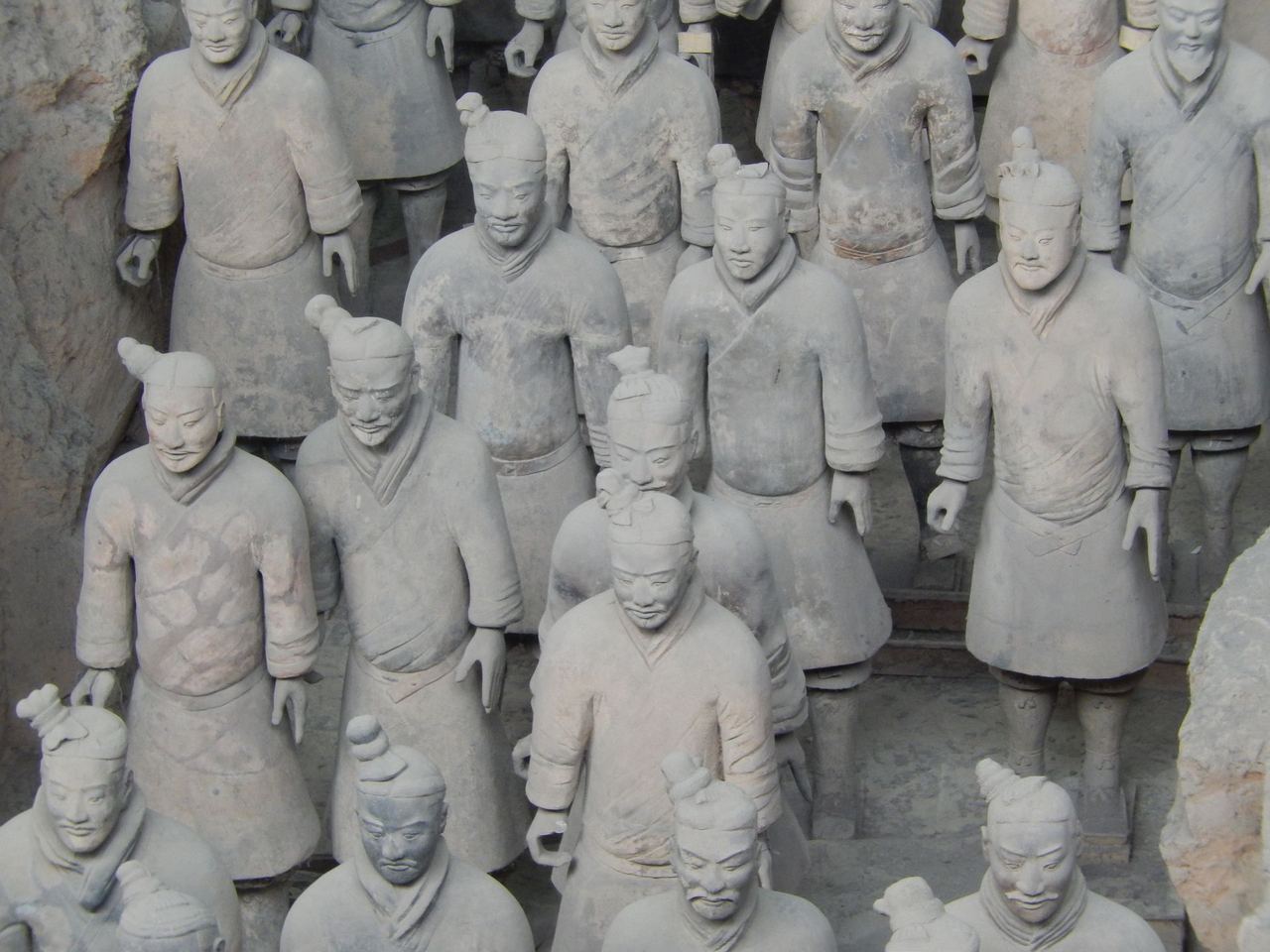
Every trip to China has to start somewhere, and a good argument can be made that it should start here. Xi’an was the capital of China for thirteen dynasties, the eastern end of the Silk Road, and the city that was already ancient when Beijing was a frontier town. When people talk about “old China” — the emperors, the walls, the armies that never die — they’re talking about this place.
The headline is the Terracotta Army, and you should absolutely see it. But Xi’an is not a one-sight city. It’s the one place where you can cycle a full circuit of a 600-year-old city wall, eat your way down a street that has fed travellers since the Silk Road, and stand under a pagoda where a monk once unpacked the scriptures he’d walked to India and back for. Here’s the three-day route we’d hand a friend.
The one thing to understand before you plan anything
Xi’an’s big sights run on real-name advance booking, and the two that matter most are the two most people get wrong:
- The Terracotta Army (兵马俑 / bīngmǎyǒng) — no walk-up tickets worth counting on. Book in advance, with your passport number, on the official WeChat mini-program “秦始皇陵博物院” or the museum’s site. Peak-season tickets are around ¥120. It is, mercifully, open every day — but the good slots go fast, and on public holidays the site is a river of people.
- The Shaanxi History Museum (陕西历史博物馆) — free, but it releases tickets in advance and they vanish within minutes. It is one of the best museums in China precisely because everyone wants in. Book the moment the window opens, or accept you’ll be at the Terracotta Army’s gift shop instead.
The rule we repeat to friends: the Terracotta Army and the Shaanxi History Museum are the two things you book before you book anything else. Everything else in Xi’an is more forgiving.
When to go
- Spring (March–May) and autumn (September–November) are the sweet spot — mild, dry, and the light on the old brick is golden.
- Summer (June–August) is hot and humid, and the Terracotta Army’s hangar-like pits get stuffy with crowds. Go at opening or don’t go at all.
- Winter (November–February) is cold and dry, but the crowds thin out and the Terracotta Army is indoors — a December visit with an empty Pit 1 is a different, quieter experience.
Getting in and where to stay
Xi’an has one main airport, Xianyang (XIY), about 40 km northwest of the centre. The Airport Express metro (Line 14) runs straight into the city, and a taxi or Didi is roughly ¥120–150. Xi’an is also a major high-speed rail hub: Xi’an North station (西安北站) is about 4.5 hours from Beijing, 3 hours from Chengdu, and 6 hours from Shanghai — see our high-speed rail guide for booking with a foreign passport.
For a first trip, stay inside or just by the city wall — the area around the Bell Tower, the South Gate (南门) or the Muslim Quarter puts you walking distance from most of Day 2’s sights. Budget: hostel beds ¥60–120, comfortable hotels ¥300–500, international brands ¥700+.
Day 1: the Terracotta Army
The Terracotta Army is the reason you’re in Xi’an, so give it your first, freshest day. It’s about 40 km east of the centre; the easiest way out is a Didi or taxi (about 1 hour, ¥150–200), or the tourist bus from the train station. Go early — you want to be inside before the tour groups.
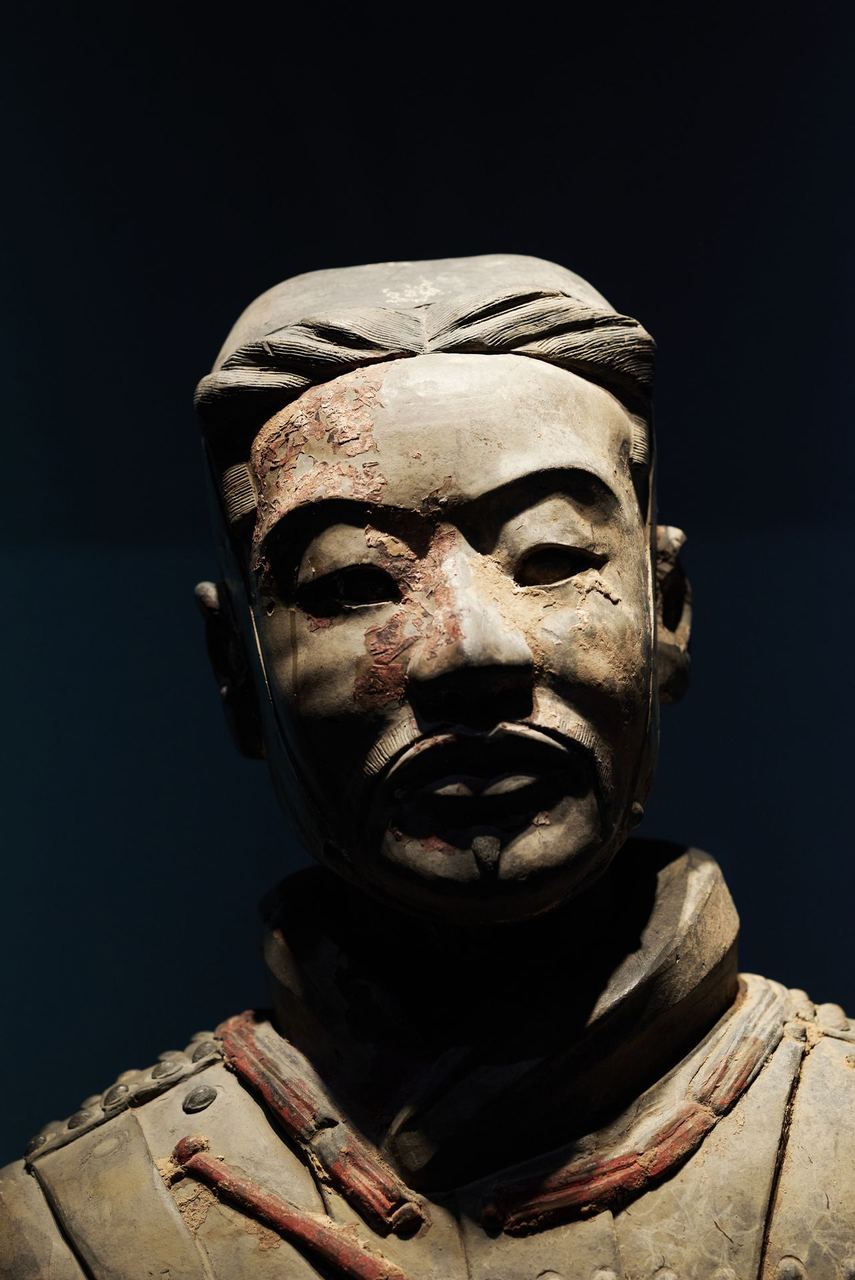
What you’re looking at is the afterlife army of Qin Shi Huang, the first emperor of China, buried in 210 BCE and only rediscovered by a farmer digging a well in 1974. Pit 1 is the spectacle — thousands of life-sized soldiers in battle formation, and here’s the detail that gets you: no two faces are alike. They were sculpted as individual men, so the first thing you feel isn’t awe at the scale, it’s the eerie sense that you’re looking at real people.
Go in this order and you’ll beat the crush:
- Pit 1 first — it’s the famous one and fills up earliest.
- Then Pit 2 and Pit 3 — smaller, but Pit 2 has the archers and cavalry, Pit 3 the command post.
- Finish at the bronze chariots — two half-scale bronze chariots so finely cast they’ve been called the eighth wonder on their own.
Give it two to three hours. On the way back, if you have the energy, Huaqing Palace (华清宫) is next door — a Tang-dynasty hot-spring palace where emperors wintered, most famous now for the “Song of Everlasting Sorrow” and a nightly light show that’s genuinely a lot.
Day 2: the wall, the towers, and the street that feeds you
Morning · the city wall
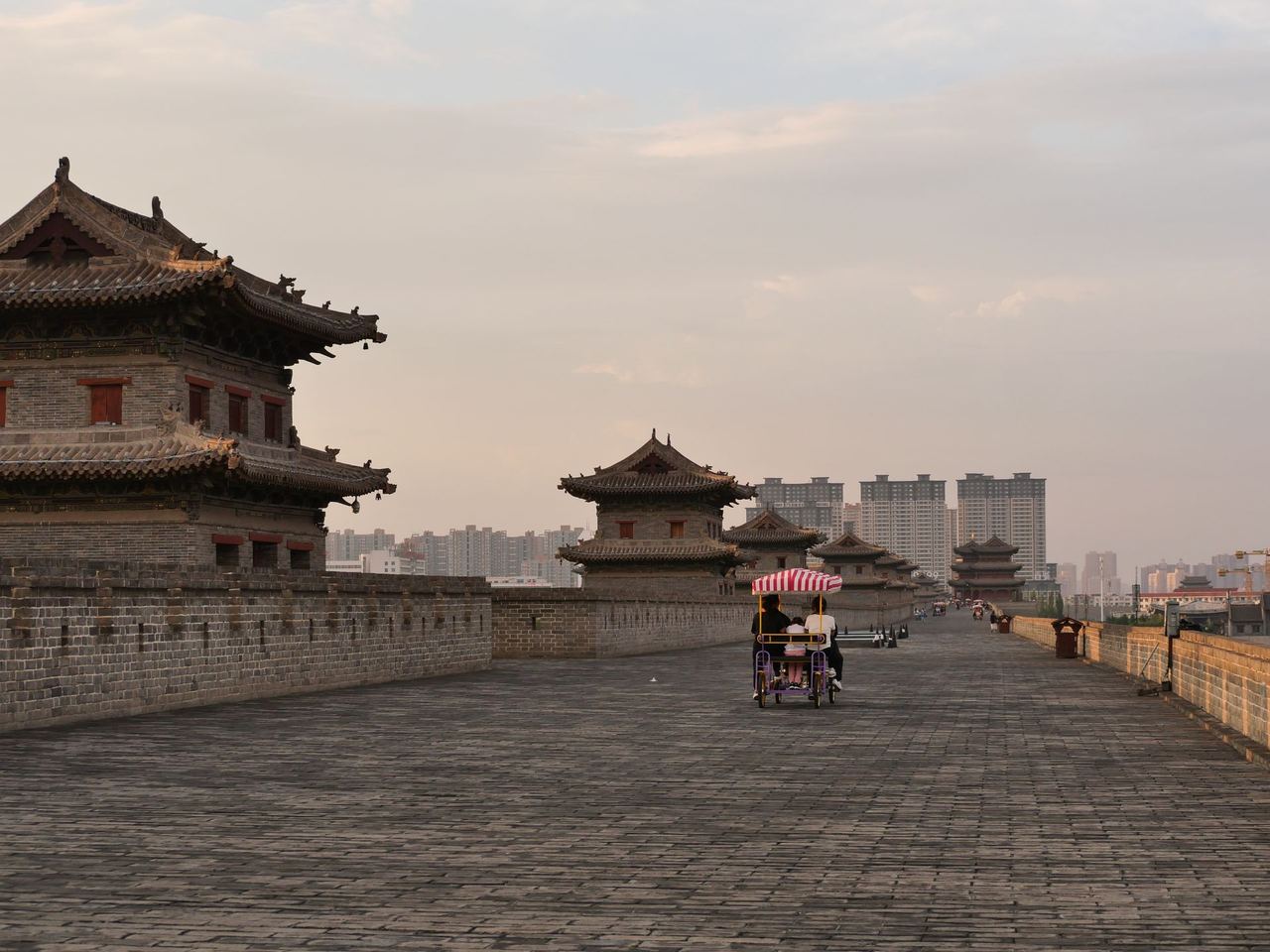
Start on top of the Xi’an City Wall (城墙 / chéngqiáng) — the best-preserved ancient city wall in China, a 13.7 km rectangle that still wraps the old town. It’s wide enough to cycle, and cycling a full lap is the single best way to see Xi’an from above. Rent a bike at the gate (entry around ¥54, bike rental extra), and go early while it’s cool. You’ll pass the city’s four gates, look down into the courtyards of the old town, and — if you time it right — watch the morning markets set up below.
Afternoon · the Bell and Drum Towers
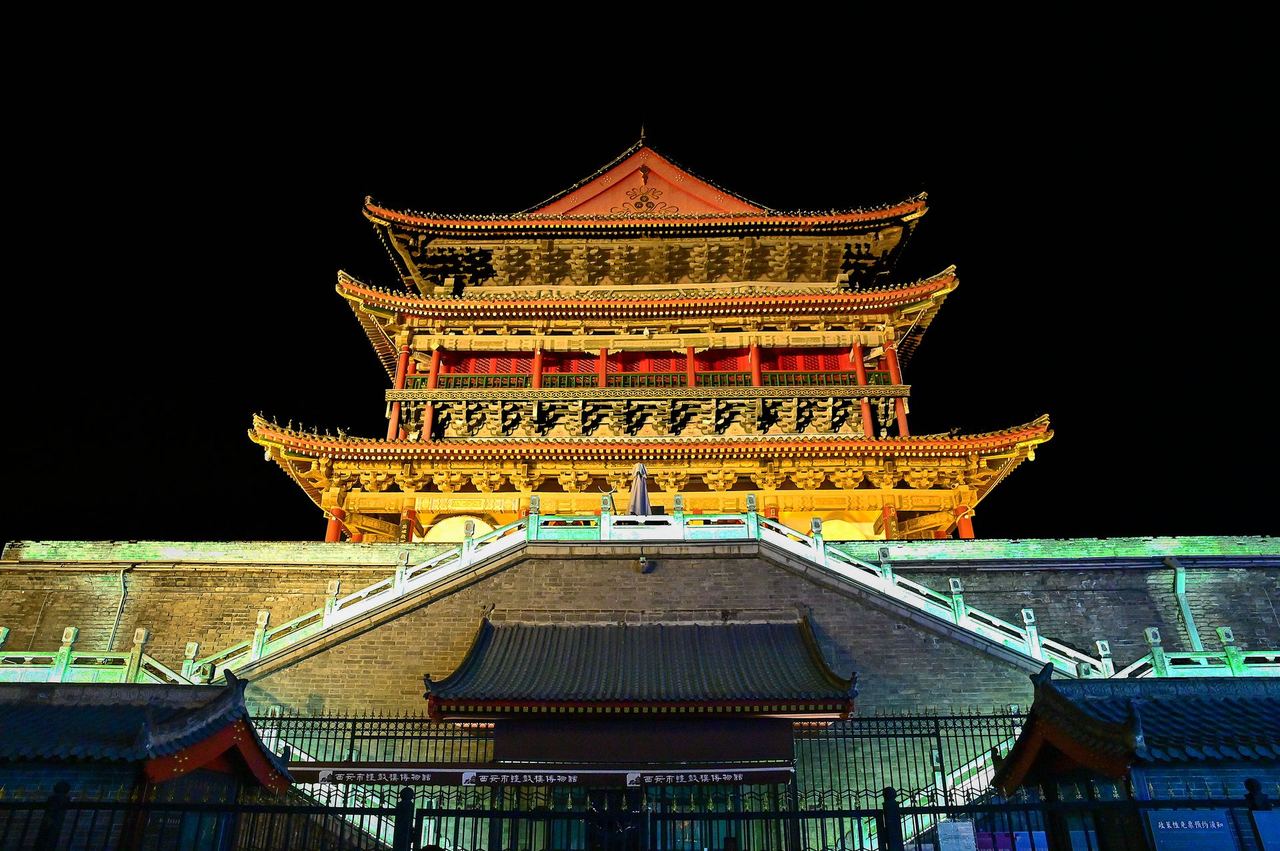
Come down near the South Gate and walk north to the Bell Tower (钟楼 / zhōnglóu), the Ming-dynasty tower dead in the centre of the city, then the Drum Tower (鼓楼 / gǔlóu) just beyond it. In the old days, the bell marked the morning and the drum the night. Climb one (the Bell Tower gives the better view, around ¥35), skip the other, and save your legs for what’s behind the Drum Tower.
Evening · the Muslim Quarter
Behind the Drum Tower is the Muslim Quarter (回民街 / Huímín jiē) — the tight web of food streets that has been feeding travellers since the days of the Silk Road, when Muslim merchants settled here and stayed. This is the real Xi’an, and it runs on its own rules: no pork, everything halal, and the food comes at you from every stall.
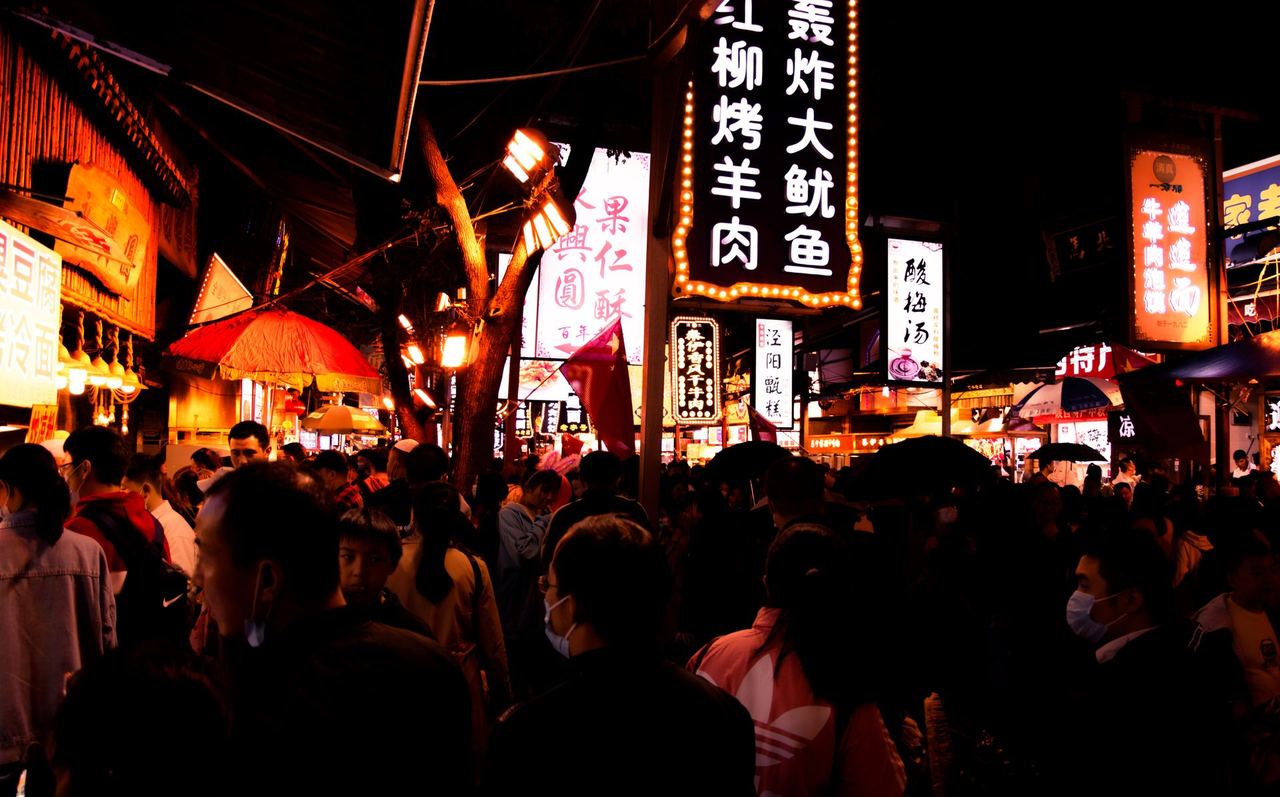
Don’t try to “do” the Muslim Quarter. Just walk down Beiyuanmen (北院门) and the lanes around it, and eat as you go — the lamb skewers (烤串 / kǎochuàn), the soup dumplings (灌汤包 / guàntāngbāo), the persimmon cakes (柿子饼 / shìzibǐng) fried sweet and sticky. For the full run-down of what to order and how, see the food section below and our guide to eating in China.
Day 3: the pagoda, the museum, and an optional mountain
Morning · Big Wild Goose Pagoda
Start at the Big Wild Goose Pagoda (大雁塔 / Dà Yàn Tǎ), the seven-storey Tang pagoda built to house the Buddhist scriptures that the monk Xuanzang carried back from India — the journey that later inspired Journey to the West. Climb it if you like (around ¥50), or just walk the North Square in front, where a huge musical fountain runs in the evening. It’s the cleanest view of Xi’an as the Tang capital it once was.

Afternoon · Shaanxi History Museum
If you got tickets, the Shaanxi History Museum (陕西历史博物馆) is the best museum in China this side of Beijing’s National Museum — a walk through the province’s 3,000 years, from Shang bronzes to Tang gold. It’s free, which is why it’s so hard to book. Book the moment tickets release, and bring your passport.
Or, if you’re short on museum tickets and long on nerve: Mount Hua (华山).
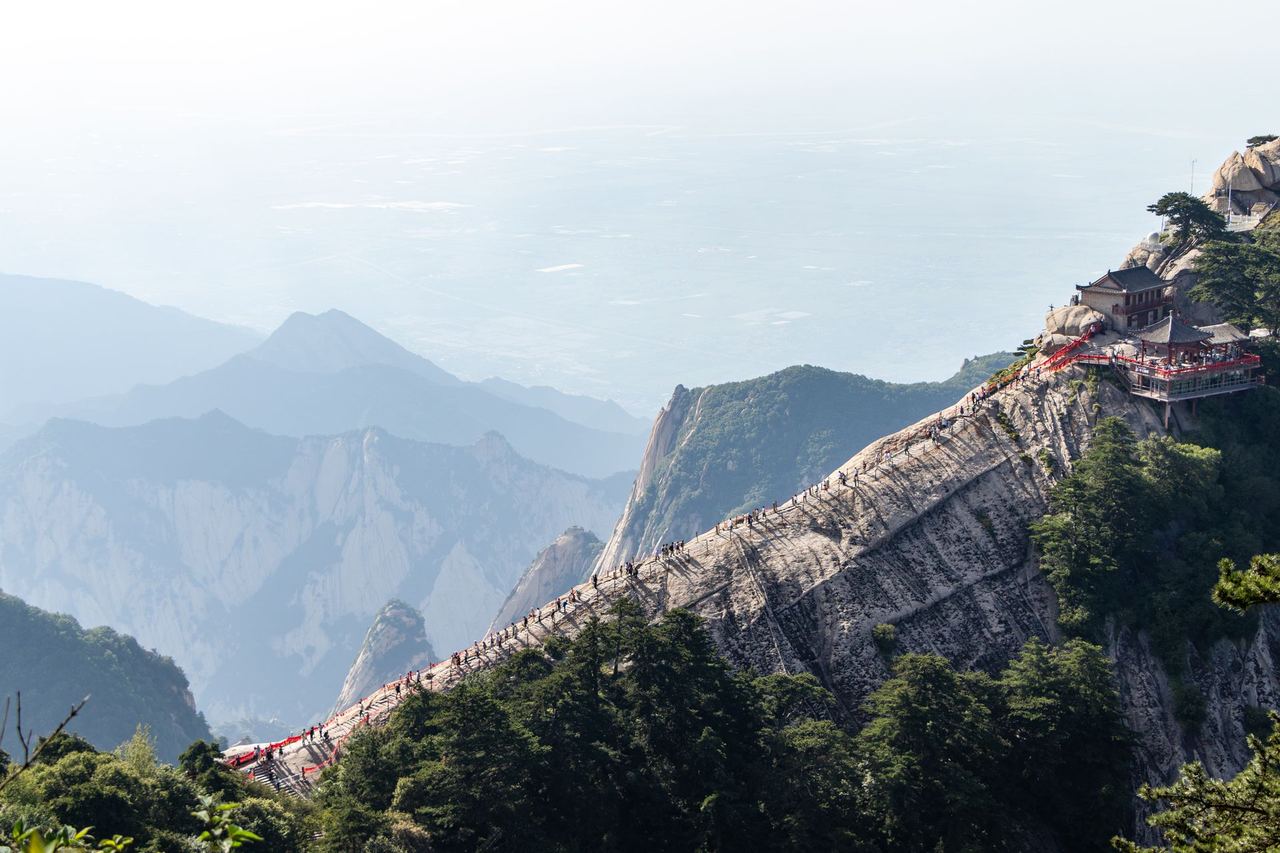
For the adventurous, Mount Hua (华山 / Huà Shān) is a full day trip by high-speed rail — one of China’s five sacred mountains, famous for a plank walk bolted to a sheer cliff face that has to be seen to be believed (and is, mercifully, optional — there’s a cable car up). It’s not for a rushed day, and not for anyone afraid of heights. Save it for a fourth day if you have one.
What to eat — the shortlist
| Dish | Pinyin | What it is |
|---|---|---|
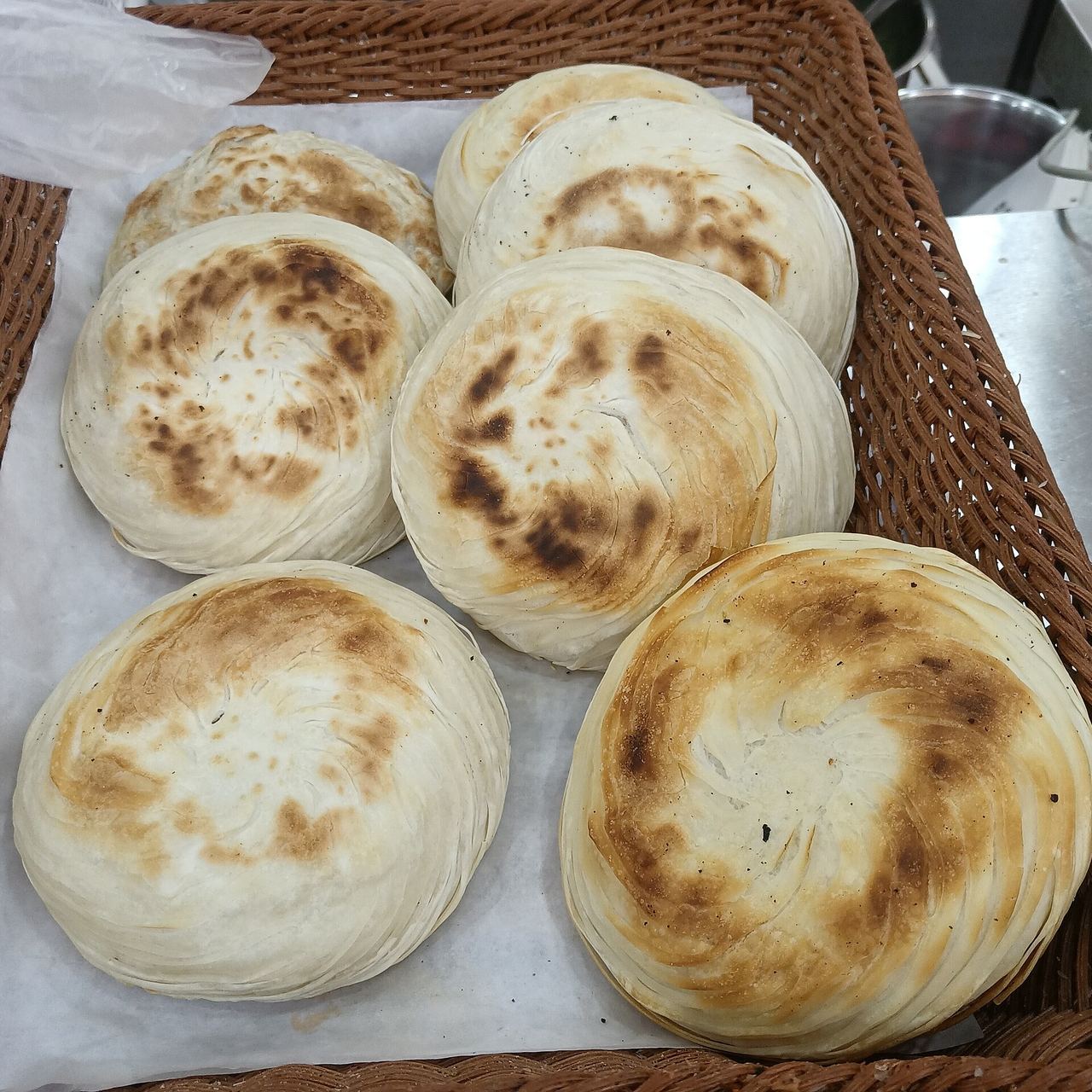
| 肉夹馍 | ròujiāmó | Shaanxi’s “Chinese hamburger” — braised meat stuffed in a flatbread |
| 羊肉泡馍 | yángròu pàomó | Crumbled flatbread in a rich lamb soup — you tear the bread yourself |
| 凉皮 | liángpí | Cold, slippery “skin” noodles in a chilli-vinegar dressing |
| biángbiáng 面 | biángbiáng miàn | Wide, belt-thick hand-pulled noodles with chilli and hot oil |
| 油泼面 | yóupō miàn | Noodles with sizzling oil poured over chilli and garlic |
| 烤串 | kǎochuàn | Grilled lamb skewers, the sound of the Muslim Quarter |
The star is the 肉夹馍 (ròujiāmó) — braised pork in a crisp flatbread, the thing Xi’an locals eat standing up, at any hour. For the full story on ordering and menu survival, see our guide to eating in China.
Practical tips (Xi’an edition)
| Thing | Our advice |
|---|---|
| Passport | Carry the physical passport daily — you need it for bookings and every ticket gate. |
| Booking | Book the Terracotta Army and the Shaanxi History Museum first, then plan around them. |
| Getting around | Metro is cheap and easy; Didi works well. The sights are spread out, so a car beats walking. |
| Payment | Everything is Alipay/WeChat Pay — see our payment guide. |
| Visas | Xi’an is covered by the 30-day visa-free and 240-hour transit policies — see our visa guide. |
| Getting online | Set up data/eSIM before you land so booking apps work at the airport — see our connectivity guide. |
| Handy phrases | 「在哪儿」 (where is), 「多少钱」 (how much), 「预约了吗」 (is it booked). |
| Weather | Dry, and dusty in spring — bring lip balm and check the air. |
Image credits
Photos via Pexels (Pexels License): terracotta army — Yolanda Reinoso Barzallo; terracotta warrior — Nguyễn Du; city wall — Rain Lü; Muslim Quarter — niguo; Bell Tower — Kenny Foo; Big Wild Goose Pagoda — TAO WANG; Mount Hua — Kevin Chen. Roujiamo — Fumikas Sagisavas (CC0) via Wikimedia Commons.