How Much Does a Trip to China Cost? (2026 Budget Guide)
On this page
The honest answer is that China is one of the best-value destinations on earth — if you know which tier you’re in. A backpacker can get through a day for about the price of a takeaway at home. A comfortable mid-range trip is roughly on a par with Southeast Asia. And at the luxury end, a five-star room and a private guide cost a fraction of what they would in Europe or Japan.
The trap is planning in the dark: most “China cost” articles either quote a single number that fits nobody, or throw up a wall of prices with no way to find yourself in it. This page does the opposite — pick your tier, get your daily number, then add the few big one-off costs on top.
The 30-second answer
- Budget traveller: about ¥200–250 a day (hostel bed, street food, metro, free sights).
- Mid-range traveller: about ¥800–900 a day (decent hotel, restaurants, the occasional taxi, the famous sights).
- Luxury traveller: ¥3,000+ a day (five-star hotels, fine dining, private car and guide).
These are per person, per day, and they exclude international flights — the one cost that varies too much by where you’re coming from to fold into a daily figure. Prices are in Chinese yuan (¥); at a rough rate of about ¥7 to US$1 (2026), that’s roughly $30–35 / $115–130 / $430+ a day.
| Tier | Lodging | Food | Transport | Attractions | Internet | Daily total |
|---|---|---|---|---|---|---|
| 🎒 Budget | Hostel bed ¥60–120 | Street & canteens ¥50–80 | Metro + bus ¥10–20 | Free / cheap ¥20–40 | Local SIM ~¥10 | ~¥200–250 |
| 🏨 Mid-range | Hotel ¥300–600 | Restaurants ¥150–250 | Metro + some taxis ¥40–80 | Main sights ¥80–120 | eSIM ~¥15 | ~¥800–900 |
| ✨ Luxury | 5-star ¥1,200+ | Fine dining ¥400–800 | Taxi / private car ¥200–400 | VIP / private guide ¥200–500 | Unlimited eSIM ~¥30 | ~¥3,000+ |
What’s included (and what isn’t)
Before the breakdown, three ground rules so the numbers don’t surprise you later:
- Flights are separate. Getting to China is the single biggest variable — a short hop from Seoul or Bangkok can cost a fraction of a long-haul from Europe or North America. Budget it separately from the daily figures here.
- These are per person. A couple sharing a mid-range hotel room halves the lodging line; a solo traveller pays the whole thing.
- They assume China’s big cities. Prices in Beijing, Shanghai and Xi’an anchor the mid-range and luxury tiers. Rural areas and smaller cities run cheaper; the budget tier barely changes anywhere.
Budget traveller: ~¥200–250 a day
This is the backpacker track — and China is genuinely good at it, because the things that are cheap here (street food, metro, hostels) are very cheap.
| Item | Cost | Notes |
|---|---|---|
| Lodging | ¥60–120 | A dorm bed in a youth hostel in a big city. Private rooms in budget hotels start around ¥150. |
| Food | ¥50–80 | Breakfast buns and soymilk (¥5–10), noodles and dumplings for lunch and dinner (¥15–30 a meal). |
| Transport | ¥10–20 | The metro is ¥2–8 a ride almost everywhere. Buses and shared bikes cost even less. |
| Attractions | ¥20–40 | Free sights — parks, temples, markets, old streets — plus the odd cheap ticket. |
| Internet | ~¥10 | A local SIM card, amortised across your trip. See the connectivity guide. |
At this level you’re eating where locals eat and walking or metro-ing everywhere. You’ll spend more than the figure on the days you do a big sight — the Terracotta Army is ¥120, not ¥20 — and less on the days you don’t.
Mid-range traveller: ~¥800–900 a day
This is where most people land, and where China’s value-for-money is at its best. For what a budget room costs in Western Europe, you get a proper hotel and a proper dinner.
| Item | Cost | Notes |
|---|---|---|
| Lodging | ¥300–600 | A solid 3–4 star hotel or a well-reviewed boutique hotel. See the hotels guide for foreigner-friendly booking. |
| Food | ¥150–250 | Breakfast at the hotel or a café, a casual lunch (¥40–80), and a nicer dinner (¥80–150). |
| Transport | ¥40–80 | Metro for most of the day plus one or two Didi rides (see the Didi guide). |
| Attractions | ¥80–120 | The famous sights average around this — ¥60 for the Forbidden City, ¥120 for the Terracotta Army. |
| Internet | ~¥15 | A travel eSIM or an international plan. |
This tier assumes you’re booking hotels in advance, eating well but not extravagantly, and using the metro as your backbone. It’s the sweet spot: comfortable, flexible, and still noticeably cheaper than most of Europe.
Luxury traveller: ¥3,000+ a day
China’s top end is where the savings get absurd. A genuinely five-star hotel room that runs US$400–600 a night in Tokyo or Paris is often ¥1,200–2,000 here, and a private English-speaking guide for a full day costs a few hundred yuan, not a few hundred dollars.
| Item | Cost | Notes |
|---|---|---|
| Lodging | ¥1,200+ | International five-stars and top domestic brands. Expect ¥1,200–3,000 a night; suites more. |
| Food | ¥400–800 | Fine dining, tasting menus, and famous restaurants. |
| Transport | ¥200–400 | Taxis and private hire throughout the day; a dedicated car and driver runs ¥800–1,500 a day. |
| Attractions | ¥200–500 | Skip-the-line packages and a private guide, which also solves the language barrier. |
| Internet | ~¥30 | An unlimited eSIM or a rented pocket Wi-Fi. |
There’s no real ceiling here — a Michelin-starred dinner or a full-day private car pushes the number up fast. But ¥3,000 a day is where a genuinely luxurious trip starts to feel real.
The big one-off costs
Some costs don’t fit a per-day number. Budget these separately, on top of your daily figure.
Getting there
Your international flight is the biggest single line and the hardest to generalise. As a guide, a round-trip from Seoul or Bangkok can be ¥1,000–2,500, from Western Europe ¥4,000–7,000, and from North America ¥6,000–12,000 — but all of this swings hard with season, advance booking and airline. Check whether you need a visa while you’re at it: many nationalities now enter visa-free, which saves both money and hassle.
Inter-city travel
China’s high-speed rail is the default way between cities — fast, cheap and (for a foreigner with a passport) straightforward once you know the steps. Second-class fares for typical legs:
| Route | Time | Approx. fare (2nd class) |
|---|---|---|
| Beijing → Shanghai | ~4.5 h | ~¥550 |
| Beijing → Xi’an | ~4.5 h | ~¥515 |
| Shanghai → Xi’an | ~6 h | ~¥670 |
Flying is often comparable once you add airport time and taxi fares, but the train puts you in the city centre and needs no security queue.
The famous sights
Entry tickets are where China quietly adds up — the big names cost real money, though still less than Western equivalents:
| Sight | Approx. ticket |
|---|---|
| Forbidden City (Beijing) | ¥60 (peak), ¥40 (off-peak) |
| Terracotta Army (Xi’an) | ¥120 |
| Mutianyu Great Wall | ¥45 + cable car ~¥100–120 |
| Shanghai Tower observation deck | ~¥180 |
| Jiuzhaigou (park + shuttle) | ~¥280 |
City walls, temples, museums and lakes are often cheap or free — the Xi’an city wall and Hangzhou’s West Lake are two favourites that cost almost nothing.
Visa (if you need one)
Most travellers reading this won’t need a visa — the visa-free calculator will tell you in seconds. If you do, a Chinese tourist visa (L) fee varies by nationality but typically runs the equivalent of US$100–150.
Travel insurance
Not optional. A routine hospital visit is cheap (see our doctor guide), but a serious illness, an accident, or a cancelled trip isn’t. Budget ¥50–150 for a single-trip policy, depending on cover.
A sample 7-day trip: Beijing → Xi’an → Shanghai
Here’s how the tiers play out on the classic first-timer’s route — three days in Beijing, two in Xi’an, two in Shanghai, with high-speed rail between them. Figures are per person, excluding international flights.
| Line | Budget | Mid-range | Luxury |
|---|---|---|---|
| Daily costs × 7 | ~¥1,600 | ~¥6,000 | ~¥21,000+ |
| Two rail legs | ~¥1,070 | ~¥1,070 | ~¥1,070 (or fly) |
| Major attraction tickets | ~¥400 | ~¥1,000 | ~¥2,500 (with guides) |
| Total (7 days) | ~¥3,000 | ~¥8,000 | ~¥25,000+ |
Roughly US$430 / US$1,150 / US$3,600+, plus flights. It’s a useful anchor: a week in China costs about the same as a long weekend in many Western cities.
What moves the price
- Season. The two big Chinese holidays — the Spring Festival (late Jan–Feb) and the Golden Week (early Oct) — spike hotel and rail prices nationwide. Summer and Golden Week are also peak crowds. The shoulder seasons (spring and autumn) are cheaper and more pleasant — see when to visit.
- City tier. Beijing, Shanghai and Shenzhen cost the most; provincial cities cost noticeably less; small towns and the countryside are cheap everywhere.
- How you book. Advance hotel and rail bookings are almost always cheaper, and the famous sights often need advance booking just to get in.
- How you move. The metro is a few yuan; taxis and private cars are where transport costs climb.
How to save (without suffering)
- Travel in the shoulder seasons — cheaper hotels, fewer crowds, better weather.
- Book trains and hotels early; the high-speed rail seats release on a schedule and the good hotels sell out.
- Use the metro and shared bikes, and save taxis for when you’re tired or lost.
- Eat where locals queue — a ¥20 bowl of noodles is often the best meal of the trip.
- Mix paid and free sights — the free ones (parks, markets, old neighbourhoods) are half the reason to come.
- Pay the Chinese way — Alipay and WeChat Pay (our guide) work for everything and avoid card or currency fees.
Pre-trip budget checklist
- Rough out your daily tier and multiply by your number of days
- Add your international flight separately
- Add inter-city rail or flight legs
- List the big-ticket sights you’ll pay for, and budget their tickets
- Check whether you need a visa and its fee
- Buy travel insurance
- Set up payment before you fly (see the payment guide)
Keeping this page accurate
Prices in China change — tickets, fares and hotel rates are all reviewed regularly, and exchange rates move. We keep this page up to date: the date below shows when it was last checked, and we refresh the numbers whenever something shifts. If you spot a price that’s out of date, contact us.
Image credits
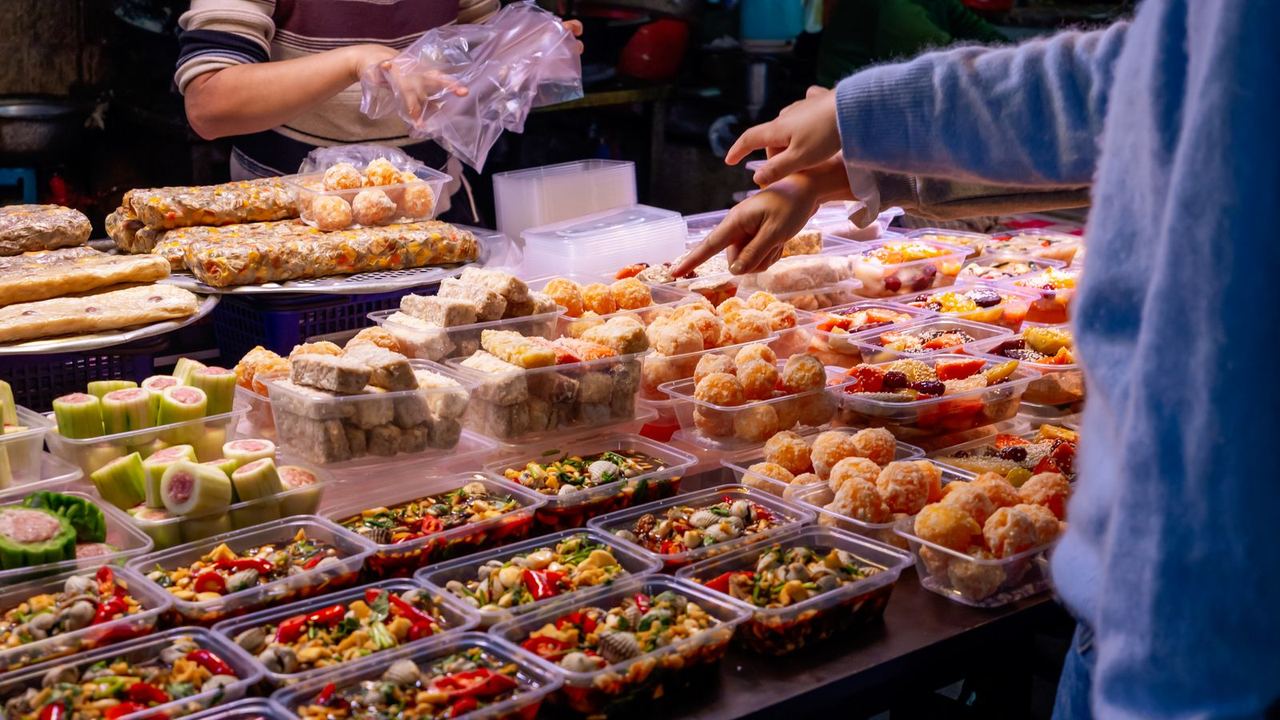
Cover photo via Pexels (used under the Pexels License — attribution appreciated but not required): street food market — Da Na.